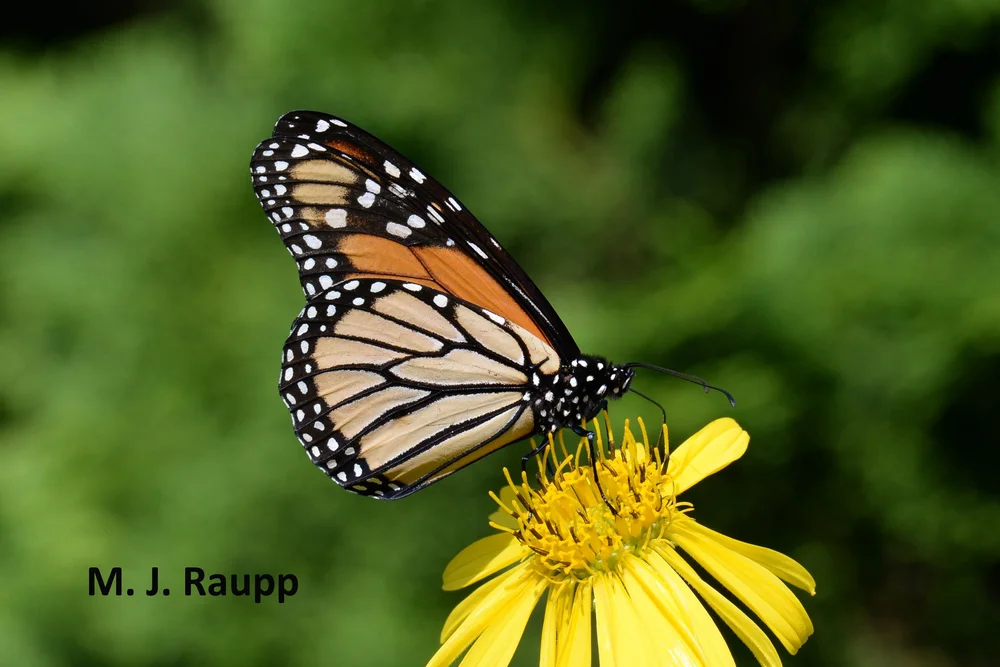
Blossoms of my cup plant, Silphium perfoliatum, are irresistible to many pollinators including Monarch butterflies.
Last week we visited a bevy of black butterflies, part of the hit parade of beauties that annually grace our gardens and meadows. Butterfly season in the DMV seems to have gotten off to a rather slow start and one species whose arrival I always fret about is the majestic monarch butterfly, journeying here from its southern redoubts. The vanguard of Monarch butterflies arrived in Columbia, MD, in mid-April this spring according to iNaturalist. But my Monarch concerns were not fully quelled until last week when a gorgeous Monarch visited my blossom-filled cup plant. Fortunately, butterfly weed in my garden also provides nectar for the Monarch and serves as a good place for her to deposit eggs. This native milkweed provides food for her caterpillars and, hopefully, caterpillars will appear in the garden in a week or two.
Cup plant is irresistible to many butterflies including beautiful Monarch butterflies. With the recent arrival of Monarchs and pockets of butterfly weed growing nearby, it won’t be long before Monarchs lay eggs and small caterpillars appear. Other recent arrivals of migrants to the garden from the south are Large Milkweed Bugs. Ready for action, they are busy making offspring that will soon decorate the seed pods of my milkweeds. So, plant a cup plant and some milkweeds. Enjoy the insects and have some fun.
Once again, eastern migratory Monarchs have survived winter and are making their journey northward for another year. But how are these peripatetic marvels doing in general? Two years ago, we learned that populations of both eastern and western migratory Monarchs had declined dramatically from levels recorded in the 80’s and 90’s. Well, according to data reported by the Xerces Society, overwintering populations of eastern migratory monarchs in the mountains of Mexico expanded from 4.42 acres in 2025 to 7.24 acres in 2026. Some good news there but scientists noted that these population levels are still “well below historic norms.”
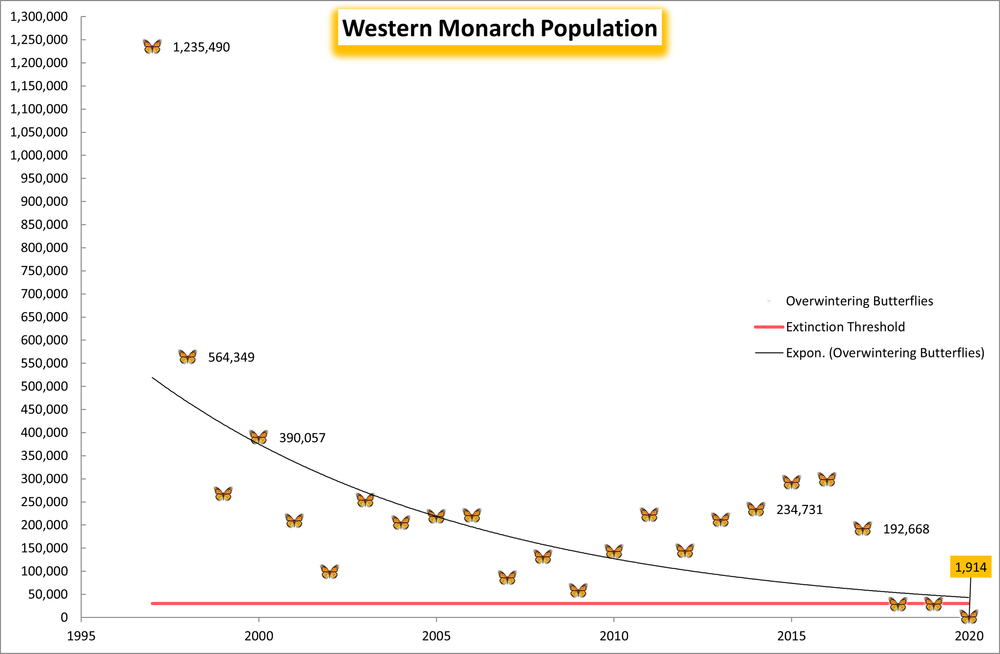
Western Monarch Population 2021. Image courtesy of Center for Biological Diversity
Some additional good news recently reported by the Xerces Society reveals that some Monarchs overwintering in northern Florida, rather than in Mexico, may migrate northward thereby bolstering migrations of their endangered Mexican-based kin. These smidgens of hope do not extend to all migratory North American Monarchs. Sadly, populations of western migratory Monarchs continue to flirt with collapse. The January 2025 overwintering counts of western Monarchs were the third lowest since records have been kept. Their populations hover around and often sink below a hypothetical extinction level.
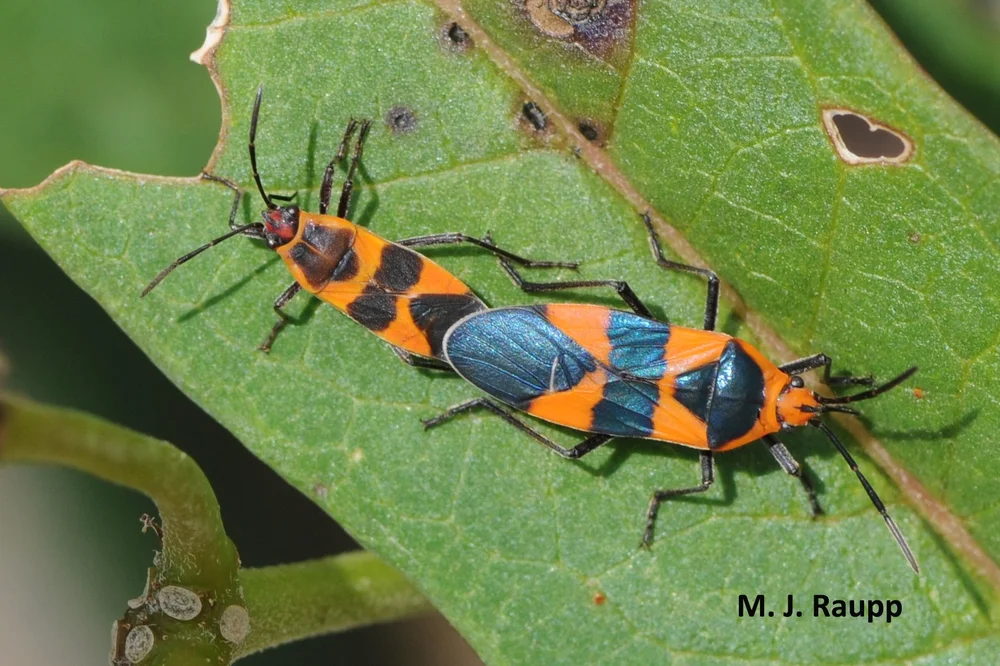
Migratory Large Milkweed Bugs arrived on my butterfly weed ready for action and got to the business of making offspring.
One migratory vagabond that seems to be prospering just fine is the Large Milkweed Bug. Some ento-enthusiasts might think that this bug hangs around the DMV all year, but truth be told, this orange and black harlequin arrives in our region from the south in late spring and early summer. Adults lay eggs on milkweed pods and immature stages called nymphs use sucking mouthparts to obtain vital nutrients from developing milkweed seeds. As milkweeds wane in autumn, Large Milkweed Bugs migrate to warmer zones. While reveling in the discovery of my monarch butterfly, I glanced down at my butterfly weed and discovered several Large Milkweed Bugs dashing about the milkweeds, engaged in the business of making offspring. It won’t be long before their tiny orange and black nymphs decorate the stems and pods of my milkweeds.
To help our struggling migratory Monarch butterflies, the Xerces Society recommends the following:
· Discover milkweed and nectar plants native to your region and plant a pollinator garden.
· Reduce your reliance on pesticides and make changes to how you manage pest issues in your community, nursery, home, farm, and other places in your community.
· Participate in the tri-national International Monarch Monitoring Blitz this summer. Report monarchs any time of year, in any country to iNaturalist or another monarch community science program.
· Find additional ways to help the eastern and western monarch populations, including supporting the protection of overwintering sites in California and restoring breeding habitat in key regions of the United States.
· Support the Xerces Society, a science-driven nonprofit working on solutions for monarchs and other butterflies.”
These practices are good not only for Monarch butterflies but also for other fascinating denizens of milkweed including Large Milkweed Bugs. Plant some milkweeds and enjoy!
Acknowledgements
We thank Dr. Shrewsbury for spotting the Monarch butterfly featured in this episode. Information on the status of migratory eastern and western monarch butterflies came from the Xerces Society for Invertebrate Conservation and the Center for Biological Diversity.

No comments:
Post a Comment