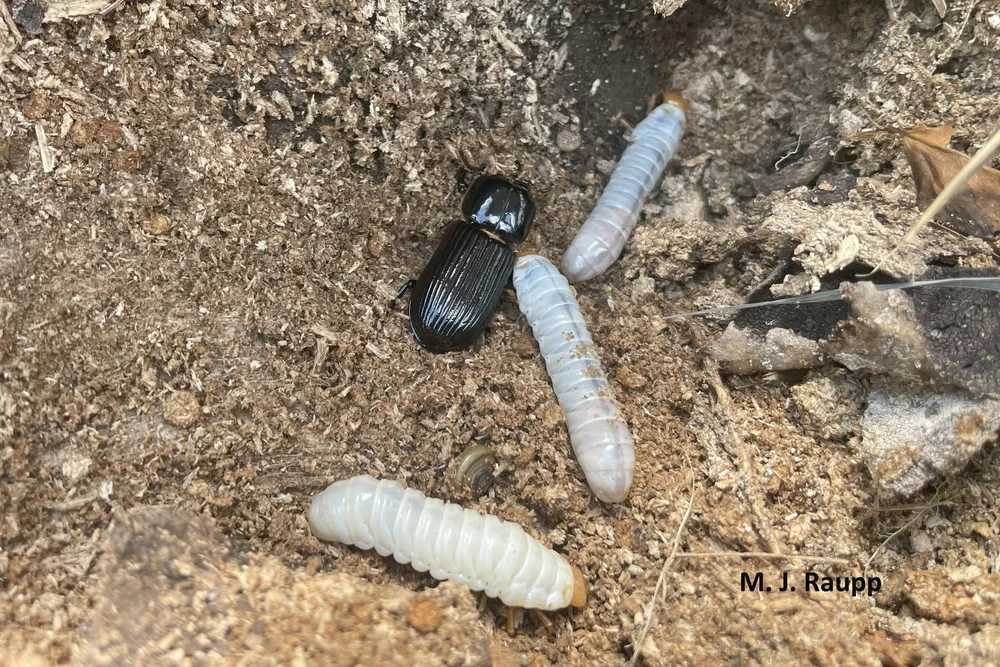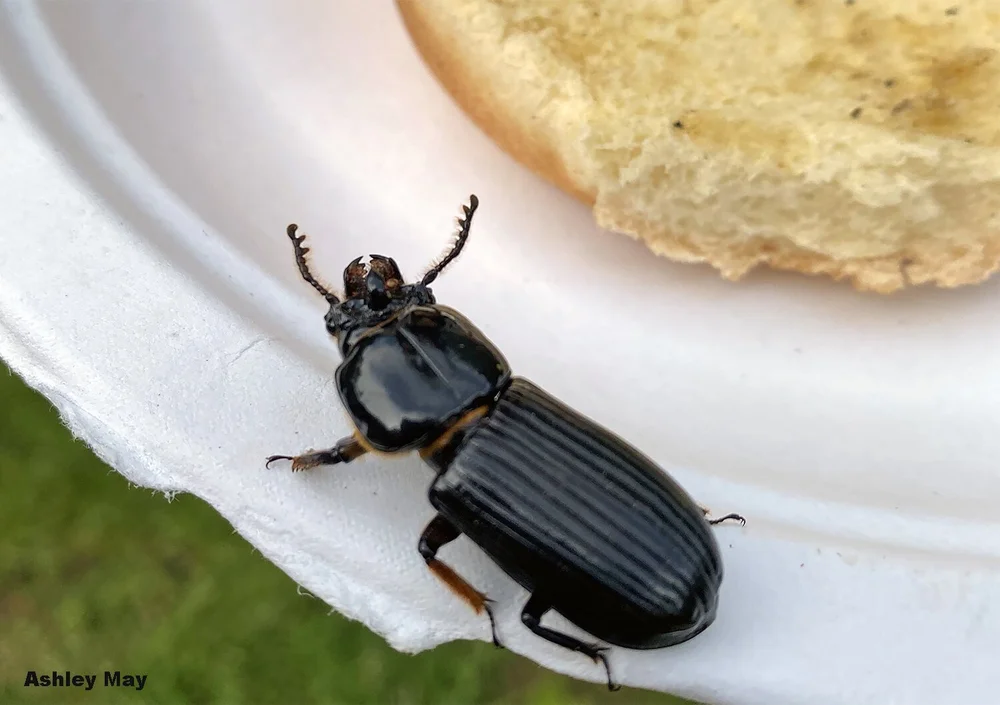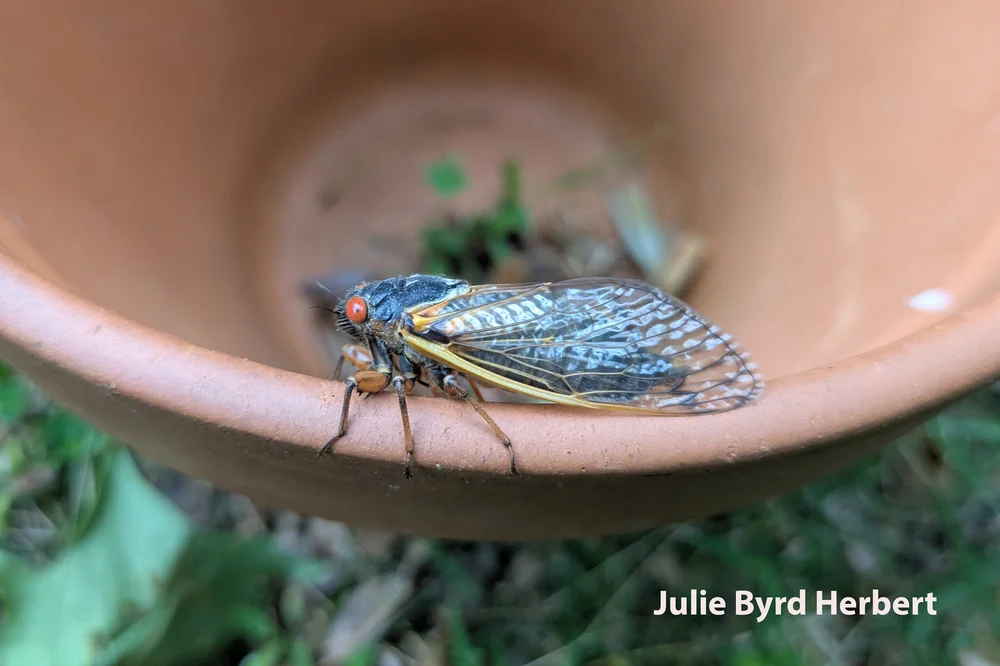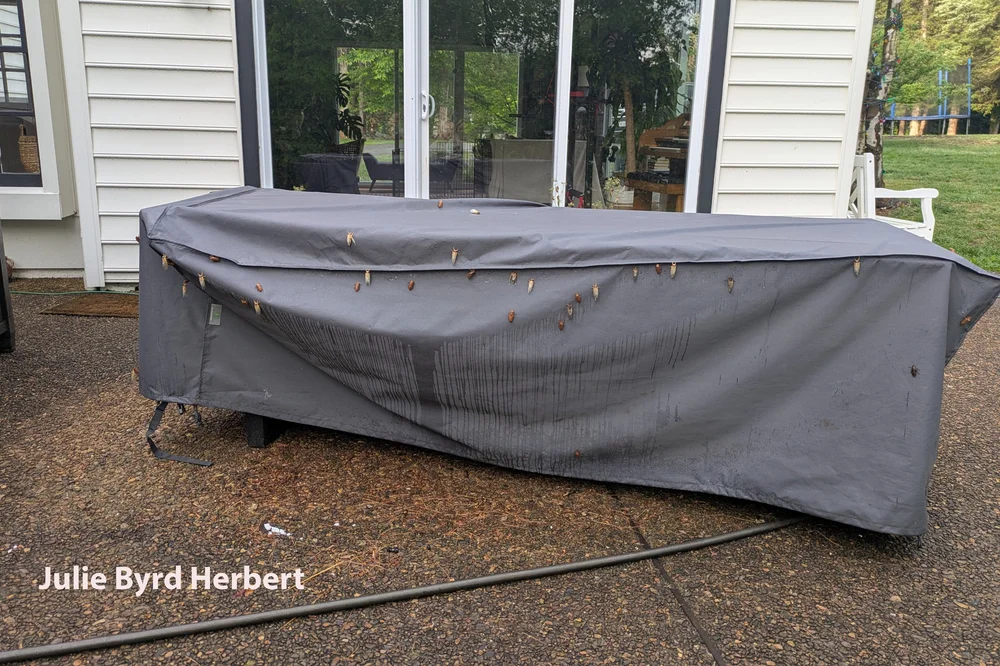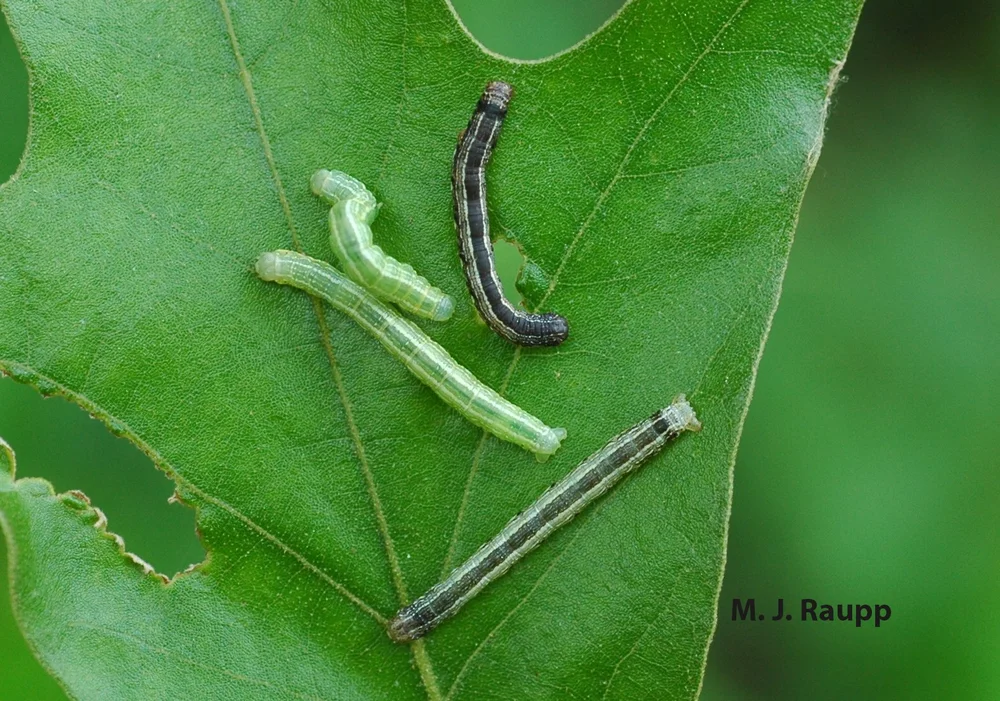
Fall cankerworm caterpillars come in two color morphs, light green and dark brown.
Last week while driving eastbound on Route 70 from western Maryland, I was amazed to see a broad swath of leafless trees stretching for miles on the western face of South Mountain. A quick hike up the side of the mountain confirmed the handiwork of thousands of caterpillars whose hungry jaws completely stripped oaks, hickories, maples, birch, and assorted other trees and shrubs of their foliage. A recent post at the Maryland Department of Agriculture’s website implicated a late season frost as one cause of woes for trees here in the DMV, however the real culprits of severe defoliation in Allegany, Garrett, and Washington counties were several species of native caterpillars collectively known as cankerworms and loopers. A decade ago, in a previous episode we visited fall cankerworms as they laid waste to oak trees along the Appalachian Trail near Weverton, Maryland. By the time I scaled the slopes of South Mountain last week, denuded trees were all that remained of the caterpillar onslaught save a few shredded leaves of small saplings and a few tall trees. Cankerworm caterpillars had finished feeding and moved to the soil to continue their metamorphosis.
So, what are these culprits called cankerworms? The name cankerworm derives from the shredded, cankered mess caterpillars make of plant leaves as they feed. Another name for cankerworms is inchworms. Here’s why. Fall cankerworms have multiple legs on their front and rear ends. By alternating their grasp between front and rear legs and arching their body into a loop, they move along twigs and leaves as if measuring the world an inch at a time. They belong to a family called Geometridae, literally “land measurer” in Greek.
Cankerworms move by alternating the positions of front legs and hind legs called prolegs. It’s easy to see why another name for cankerworm is inchworm. Early in the season cankerworms make holes in leaves and nibble at the margins. Later in the defoliation cycle only shredded leaves, leaf veins, or no leaves may remain.
This season of evil began in early spring when eggs deposited on branches last fall and winter hatched near the time that buds of hardwood trees sprang to life, creating a new crop of tender leaves. Tiny caterpillars fed on young leaves, creating a type of damage called shot hole damage. Shot hole damage is so named because infested leaves appear to have been blasted with a shotgun. As the caterpillars grow and develop, they remove ever–increasing amounts of leaf tissue. These green or brown caterpillars dangle from leaves on a strand of silk when disturbed. Their larvae reach phenomenal numbers in some locations and years, and devastate many shade trees such as oaks, maples, elms, and lindens. The Maryland Department of Agriculture has reported periodic outbreaks in Anne Arundel, Calvert, Charles, and St. Mary’s counties, in addition to the ones in Frederick and Washington counties in 2015 and again in 2020. After pillaging trees in spring, caterpillars move to protected locations on the forest floor to pupate. Later in the season as autumn turns to winter, fall cankerworms complete their development and adults emerge from the earth.
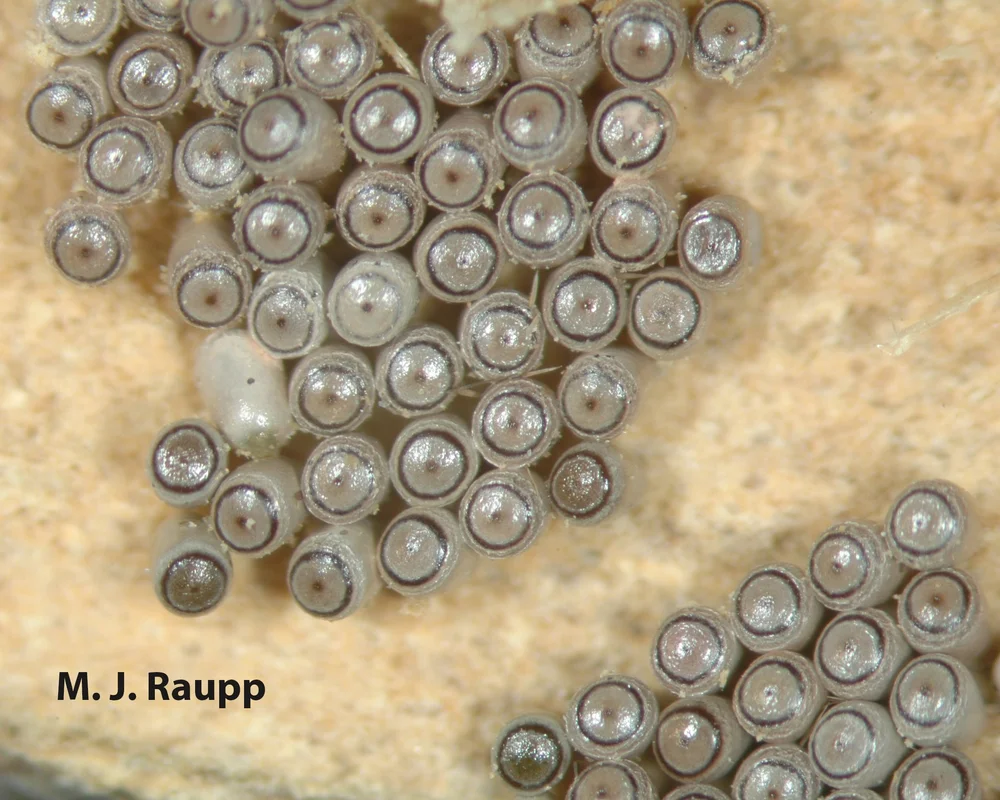
Fall cankerworms lay eggs in treetops in late autumn and early winter.
These strange moths are remarkable in that the females have lost their ability to fly. Many entomologists believe that the cankerworm has found a clever way to leave more offspring behind. By shifting bodily resources from equipment needed for flight, such as wings and muscles to flap them, and redirecting these resources to the production of eggs, the female cankerworm may be able to lay more eggs, thereby bringing more little caterpillars into the world and ultimately enhancing her lineage’s odds for survival. Wingless females move from the soil and climb vertical structures such as trees and buildings. Shortly after sunset, on milder winter nights, female moths release a chemical signal called a sex pheromone to attract a mate. Fall cankerworm males have functional wings and are good fliers. The male moths track the pheromone to its source and the chilly moths mate. After this interlude, females climb high into the trees and place eggs on the bark of twigs and branches. Females do not live to see their offspring. Unlike other species of moths that have tubular mouthparts used to sip nectar, the female fall cankerworm lacks functional mouthparts. She cannot feed and shortly after depositing her eggs, she dies.
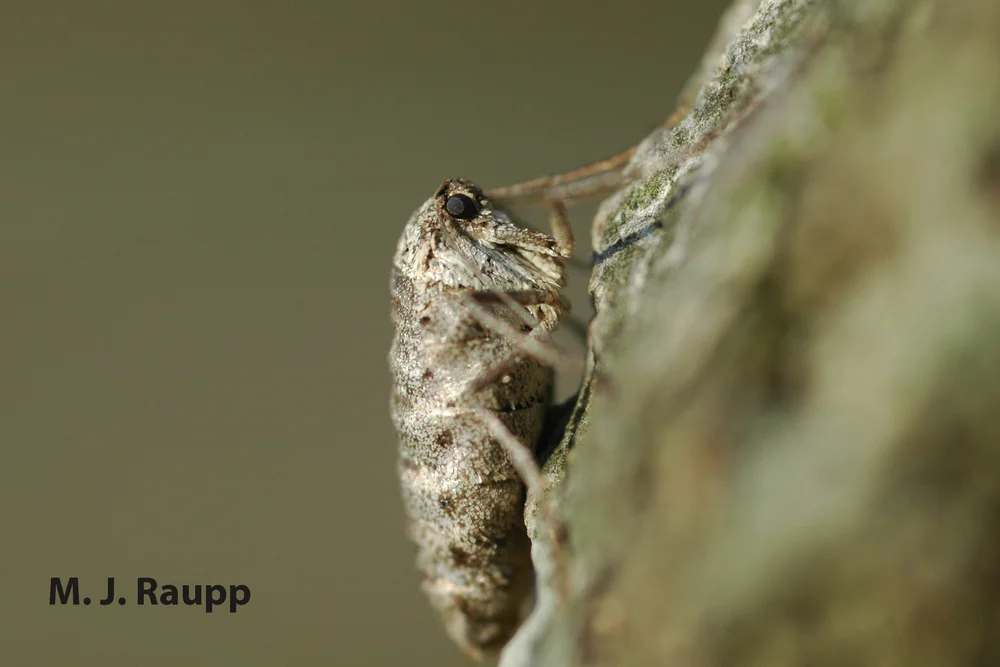
The female fall cankerworm is a strange creature with non-functional mouthparts and no wings. She walks rather than flies to the treetops to lay eggs.
In addition to the fall cankerworm, other members of their clan, such as the spring cankerworm, half-winged geometer, and linden looper have flightless females. A close relative of the fall cankerworm called the winter moth has been making most unwelcome appearances in New England where it is wreaking havoc on many deciduous trees. Members of the nefarious cankerworms clan make their presence known up and down the east coast where communities and individual homeowners scramble to deal with this problem. Many insecticides are available to thwart this pest, including the microbial insecticide Bacillus thuriengienses (Bt) and reduced risk products containing spinosad, as well as many more potent insecticides. However, the sheer magnitude of the outbreaks makes control difficult and widespread applications of insecticides may harm non-target organisms. Some citizens believe they found relief by placing barrier bands around the trunks of trees. These bands snare female moths as they attempt to reach the treetops to lay eggs. In one published account on the use of barrier bands, the authors trapped thousands of moths but defoliation in the treetops was unaffected.
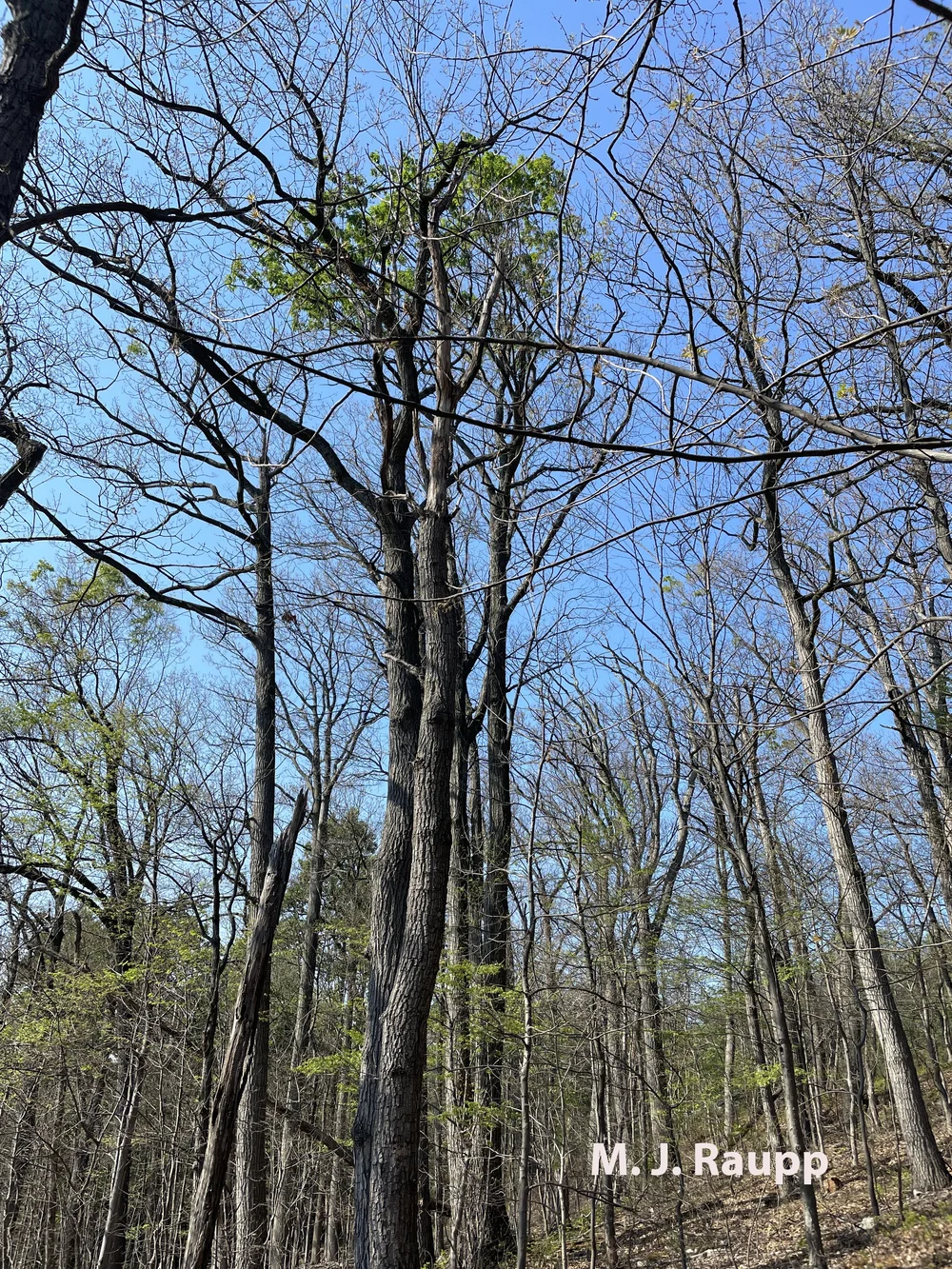
Repeated defoliations by cankerworms like this one on South Mountain, Maryland weaken trees, causing dieback and death in some cases.
While short term eruptions of cankerworms are thought to have little lasting effects on trees, long term outbreaks of cankerworms in cities including Charlotte, North Carolina, have increased mortality of forest and shade trees. Trees in urban areas may face increased risk of death when cankerworms defoliate them due to inherent stress related to water deprivation, elevated temperatures, pollutants, and infestations of other debilitating insects and diseases. Fortunately, in natural settings Mother Nature’s checks and balances usually bring outbreaks of cankerworms to an end after a few years. Next week, we will meet two awesome predators that help put a beat-down on cankerworms and their kin.
References
The great references “Caterpillars of Eastern North America: A Guide to Identification and Natural History” by David L. Wagner, “The Effect of Sticky Bands on Cankerworm Abundance and Defoliation in Urban Trees” by Chanthammavong Noukoun, Gregory Bryant, and Steven D. Frank, and “Fall Cankerworm. Forest insect and disease leaflet 182. USDA Forest Service, Pacific Northwest Region (R6), Portland, OR” by W. M. Ciesla and C. Asaro were consulted to prepare this article. To learn more about caterpillar outbreaks in the DMV this year please visit this link: https://news.maryland.gov/mda/press-release/2026/05/18/public-notice-maryland-department-of-agriculture-monitoring-frost-damage-and-caterpillar-outbreaks-in-western-maryland-hardwood-trees/