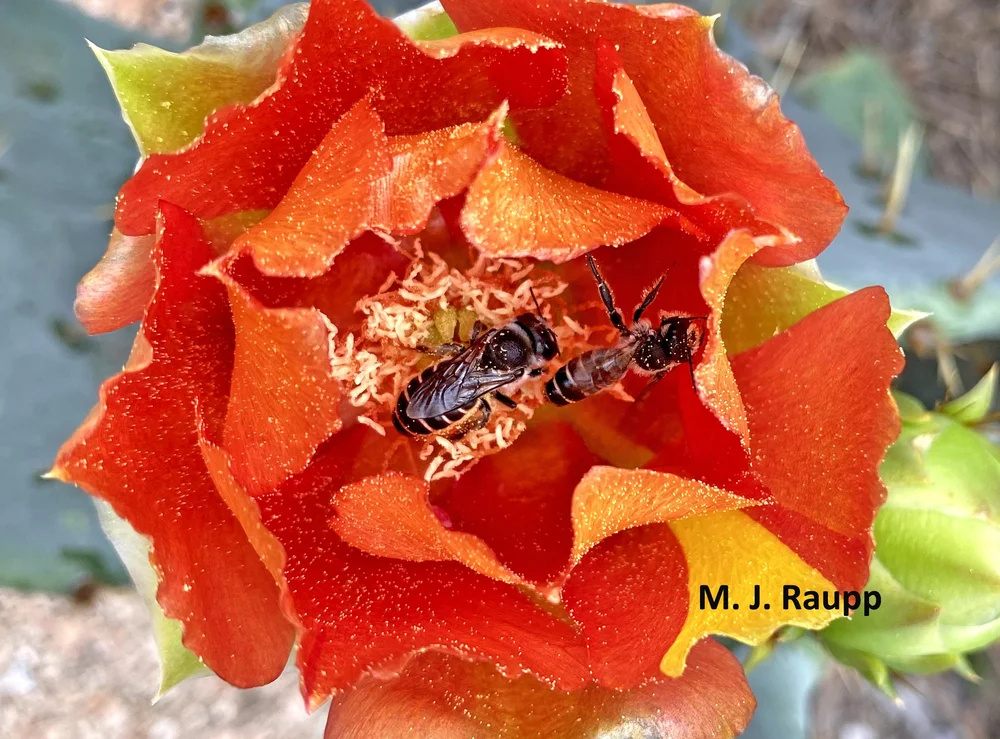
A pair of cute megachilid bees are busy pollinating flowers of the prickly pear cactus.
Here in the DMV Mother Nature can’t make up her mind whether it is late winter or early summer, as temperatures fluctuate between the 90s and 20s this spring. To escape this all-to-often chilly weather, let’s travel to sunny San Antonio, Texas, to visit some cool bees on a warm spring day. While wandering along the Texas Native Trail in the amazing San Antonio Botanic Garden, we encountered spectacular patches of Opuntia cactus. Several of these prickly pears were in glorious bloom and pollinators were taking full advantage of nectar and pollen rewards provided by the prickly pears. Among the most entertaining of the pollinators were rambunctious bees in the family Megachilidae, whose members go by many names including leafcutter bees and mason bees, which we visited in previous episodes.
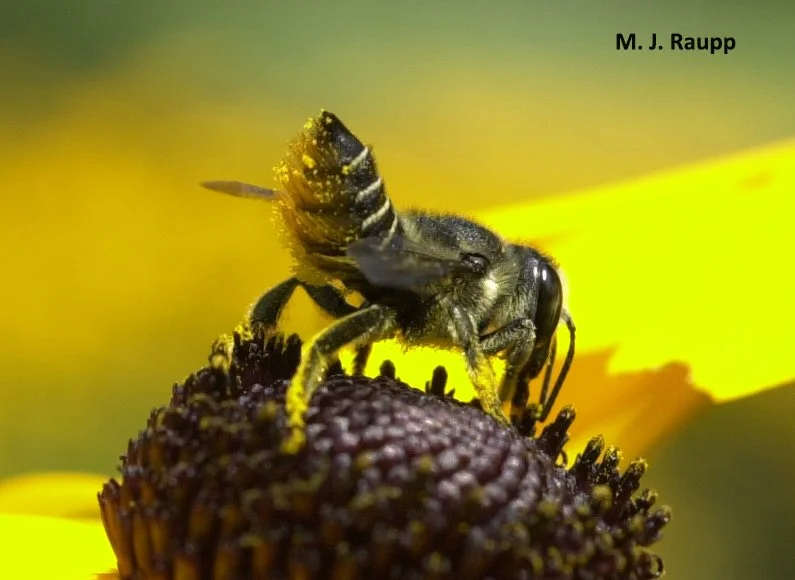
Some bees collect pollen in pollen baskets on their hind legs but megachilid bees like this leafcutter collect pollen on specialized hairs called scopa on the underside of their abdomen.
Peering into a prickly pear blossom, I was surprised to see a roiling sea of pollen-laden anthers encircled by flower petals. After a short suspense, two very cute megachilids surfaced from the anthers and took flight. Nearly every prickly pear blossom was attended by these busy pollinators. Lacking the knowledge of exactly who these beauties might be, I dove into the literature and found a fascinating publication on the nesting behavior of one species of megachilid that frequents Opuntia in the southern US. Lithurgopsis apicalis goes by the common name of orange-tipped woodborer. Other megachilids called mason bees take advantage of existing galleries in wood to raise their young. Their cousins the leafcutters cut circular slices of leaves to create cigar-like rolls which they fill with pollen to raise their brood.
Springtime in Southwestern states brings breathtaking blossoms to a variety of native plants including Opuntia, the prickly pear cactus. Nutritious pollen and sweet nectar attract a wide variety of pollinators, including members of the megachilid. Pollen from pricky pears is gathered by bees on hairs called scopa that cloak their undersurface. Bees in the genus Lithurgopsis build linear galleries in the soft interior stems of the Agave plant and provision the galleries with prickly pear pollen to feed their young. Collecting pollen is serious business and tussles among the rambunctious bees are regular events.
By contrast, the orange-tipped wood borer builds its brood chambers in the soft tissue of dying flower stalks and stems of the Agave plant. After entering through gaps in the outer layer of the stem, they bore though the inner tissue creating elongate galleries. These galleries are provisioned with prickly pear pollen that serves as food for their developing larvae. Unfortunately, even though prickly pear cacti can be found throughout much of North America, including here in the DMV, entertaining and energetic Lithurgopsis bees occur most frequently in the south and in states west of the Mississippi River. According to iNaturalist, no members of the genus Lithurgopsis are found in Maryland, DC, or Virginia.
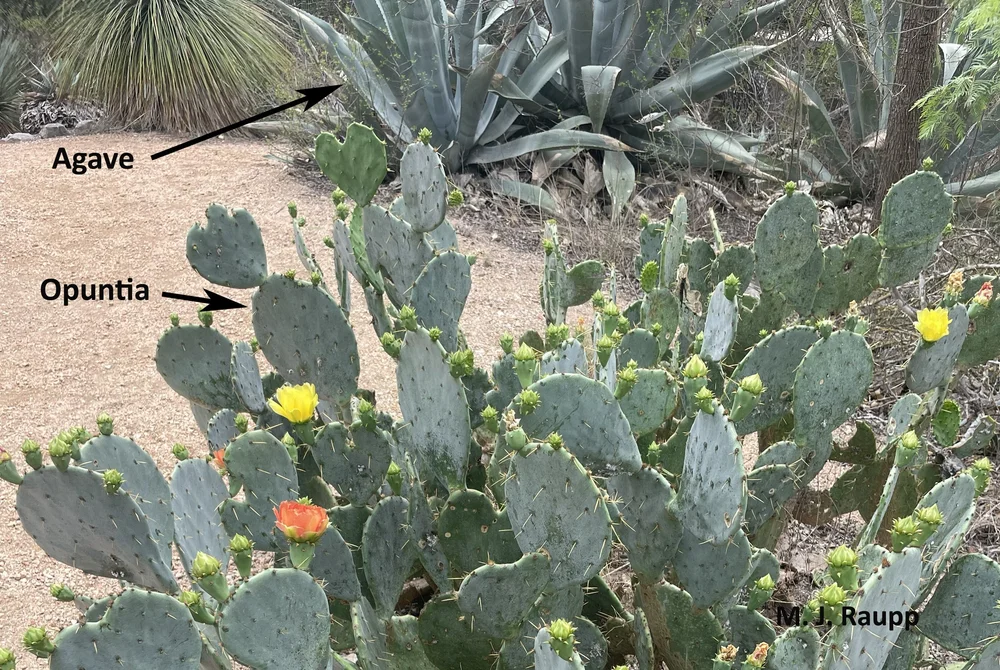
Opuntia, the prickly pear cactus, provides nectar and pollen for many pollinators including megachilid bees. Megachilids in the genus Lithurgopsis, provision galleries in the stems of Agave with pollen from prickly pear to raise their young.
If your travels find you in southern and western states, and you happen upon a prickly pear cactus (don’t laugh, it could happen), take a moment to try and spot one of these beautiful and amusing native pollinators.
Acknowledgements
Special thanks to Dr. Shrewsbury for contributing video for this week’s episode. Thanks also to the San Antonio Botanic Garden for creating a wonderful space to enjoy plants from Texas and around the world. The fascinating article “Nest Site Selection and Nesting Behavior of the Bee Lithurgopsis apicalis (Megachilidae: Lithurginae)” by Jerome G. Rozen, Jr. and H. Glenn Hall was used as a reference for this episode.

No comments:
Post a Comment