Monday, 23 March 2026

Destination: Rainforests of Central America to meet a behemoth of the cockroach clan, Blaberus giganteus, the Central American giant cave cockroach

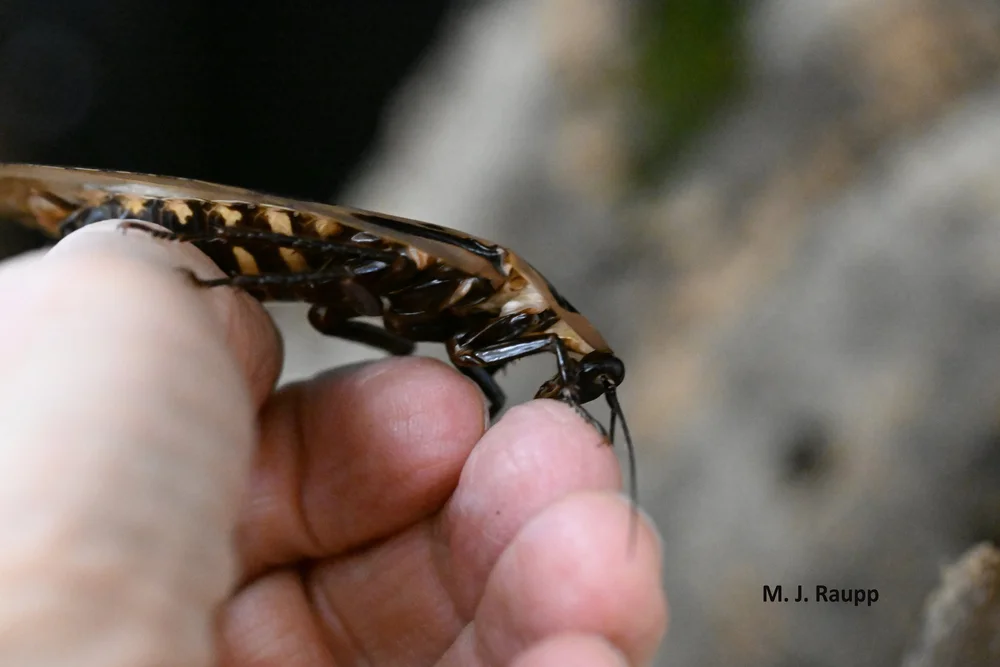
At almost five inches in length this is not the cockroach you want to find on the kitchen floor.

This week we leave behind the tropical forests of Malaysia and Australia where we met gorgeous orchid mantises, spikey jungle nymphs, and grotesque giant stick insects. Let’s return to the rainforests of Central and South America to visit with one of the largest cockroaches on Planet Earth, the Central American giant cave cockroach.
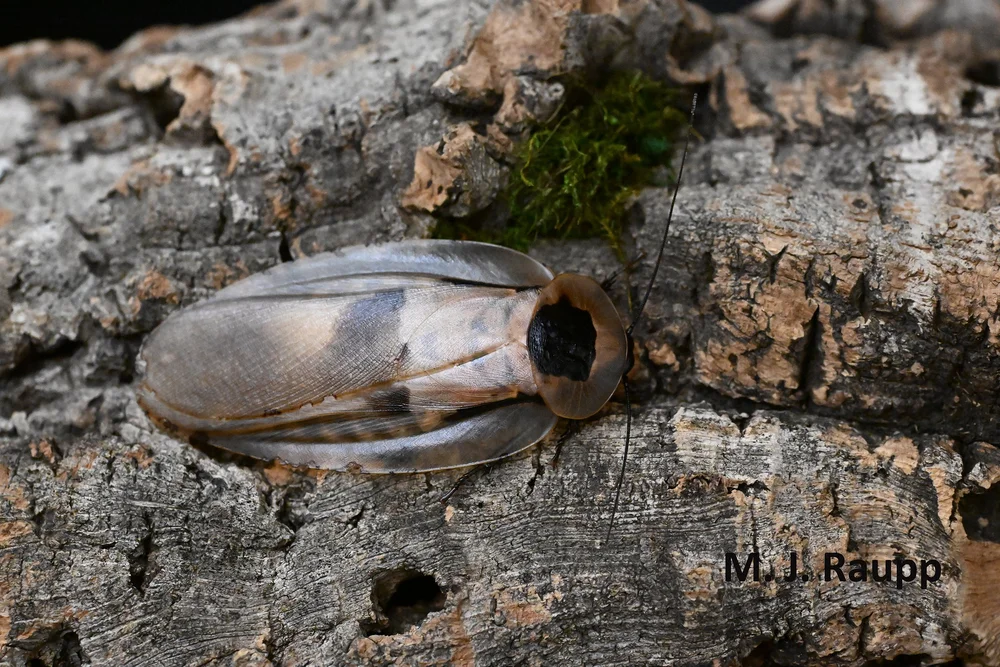
Central American giant cave cockroaches are omnivores consuming several types of decaying organic matter.

Harking back to my days in graduate student housing, I had the opportunity to meet my first cockroaches, nasty little rascals called German cockroaches. These disturbing little creatures measured roughly half an inch in length. Now image you turn on the kitchen light at night and see a cockroach ten times the size of the German cockroach skittering across the floor. Well, that’s the size of the Central American giant cave cockroach. This behemoth of the cockroach clan is found in several Central and South American countries as well as many islands in the Caribbean Sea. As its name implies, it is a denizen to limestone caverns and may also be found in the hollows of trees and on the damp, dark floor of tropical forests.

At nearly five inches in length, the Central American giant cave cockroach is one of the largest insects on earth. Wing buds on the back of this nymph foretell its upcoming molt to a winged adult. Bacteria living in the gut of the giant cockroach produce essential amino acids from nutrient-poor decaying plant material consumed by the cockroach. This symbiotic relationship provides home and food for the bacteria and the building blocks of proteins to support growth and development of this giant insect.

This omnivore consumes many kinds of decaying organic matter, but a primary component of its diet is decaying plant material, a notoriously poor source of the important nutrient nitrogen, a key element found in amino acids, the building blocks of proteins. How does this giant of the cockroach world obtain amino acids necessary for growth and development? Through eons of evolution, the giant cave cockroach has formed a symbiotic relationship with a bacterium known as Blattabacterium that makes its home in specialized cells in the gut of the cockroach. These endosymbionts take raw materials like urea and ammonia from food found in the gut of the cockroach and convert these compounds into all the essential amino acids needed for the survival of the giant cave cockroach. This remarkable alliance between a microbe and an insect helps the giant cockroach thrive and repurpose decaying organic matter in the rainforests of the New World.  
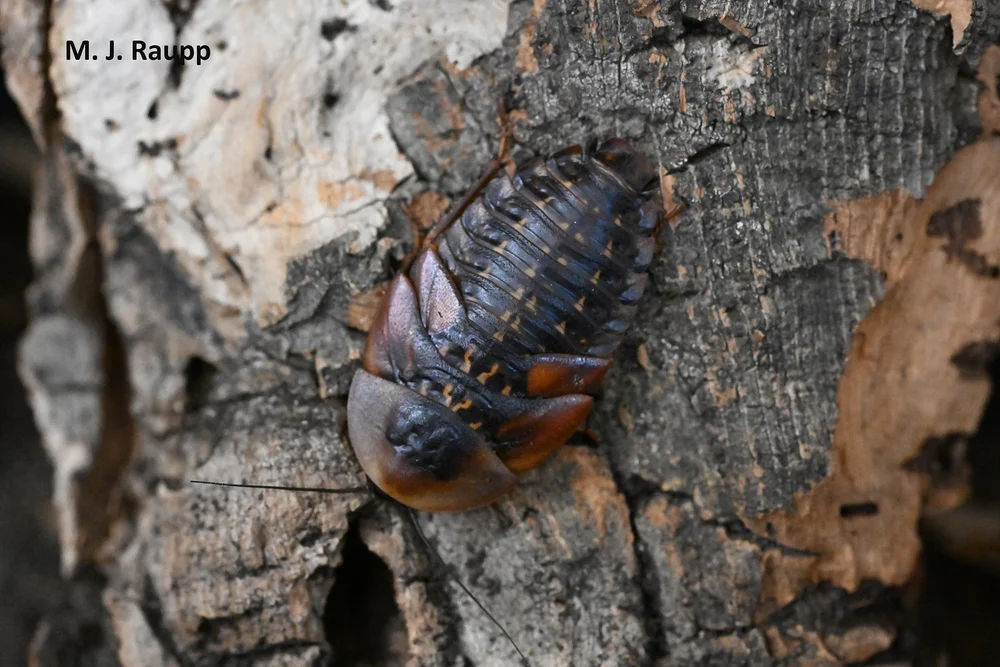
Wing buds developing on the thorax of this giant cockroach nymph are a sure sign that the molt to winged adult is not far off.

Acknowledgements

We thank Todd Waters for maintaining the Insect Petting Zoo at the University of Maryland  and thereby providing the inspiration for this week’s episode.  The fascinating article “Genome Sequence of Blattabacterium sp. Strain BGIGA, Endosymbiont of the Blaberus giganteus Cockroach” by C. Y. Huang, Z. L. Sabree, and N. A. Moran provided valuable insights into the mutualism between microbe and cockroach that powered this story.

Monday, 16 March 2026

Destination New South Wales, Australia: for a visit with the Macleay’s spectre, Extatosoma tiaratum

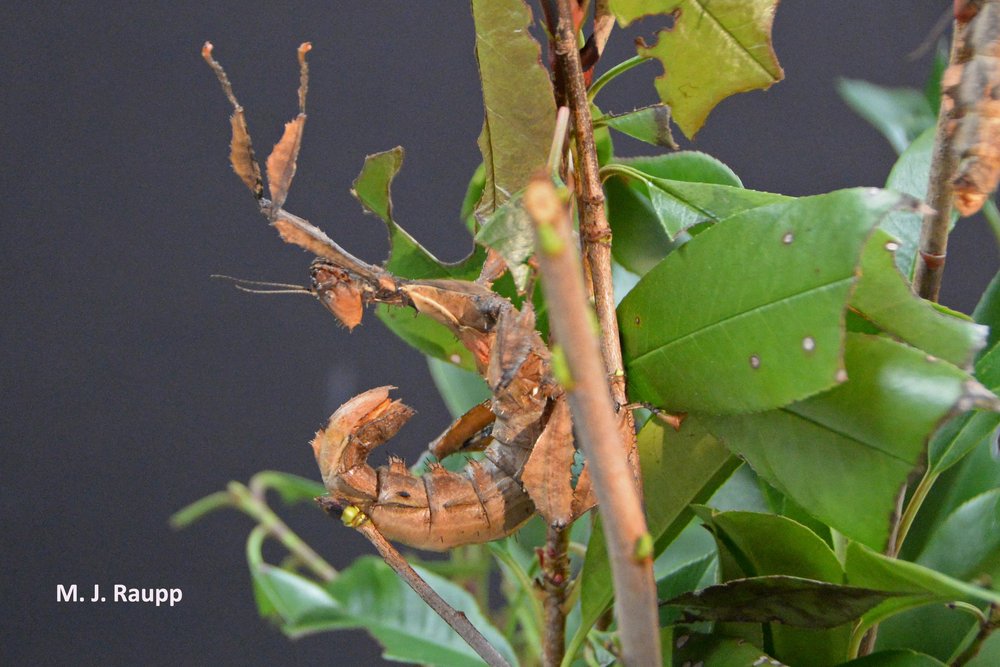
Is that a dead leaf or an insect clinging to a branch?

Previously, we stopped by the island of Borneo to visit gorgeous orchid mantises and strange spiny jungle nymphs. Our friend the jungle nymph taught us a few things about hiding in plain sight and how sharp her defensive spines were. Ouch! Well, this week we head about 3,500 miles further south to the eastern coast of Australia in New South Wales to meet the Macleay’s spectre, a.k.a. the giant prickly stick insect or Australian walking stick so named after the famed British naturalist William Sharp Macleay who described this magnificent insect. We met other charismatic members of the walking stick clan such as the twostriped walking stick, northern walking stick, and elegant phasmatid in previous episodes.

Females of this giant of the insect world measure more than five inches across from the tips of their outstretched forelegs to the tips of their hind tarsi (analogous to toes). And these are heavied body, massive insects with fully grown females weighing more than a thousand times that of a common housefly. To generate this much mass Australian walking sticks consume large amounts of foliage. In their native realm, the diet consists of leaves of eucalypts but our colony here at the University of Maryland Insect Zoo thrives on foliage of local plants including leaves of Photinia. With so much juicy biomass in play, one might think that predators like magpies or leaf-tailed geckos would find these to be excellent tucker. Ah, but Macleay’s spectre has several tricks to defeat the beaks and jaws of hungry predators.

Looking like a dead leaf gently swaying in a breeze is one way to fool the hungry eyes of a jungle predator. This form of mimicry called motion crypsis is even deployed while leisurely devouring a leaf by this magnificent mistress of disguise.

Trick number one, look like a dead leaf. With expanded plates on outstretched legs and an unusual posture of arched abdomen and thorax, a resting walking stick appears to be nothing more than a dead leaf waiting to drop from a plant. This camouflage could easily fool a visually astute predator searching for the symmetrical lines and characteristic shapes of other insects on the menu such as beetles or butterflies. Trick number two, sway in the breeze. Many walking sticks, including Macleay’s spectre, gently rock their bodies to and fro when a temperate breeze or vibration disturbs the substrate on which they rest. Scientists believe that predators learn to overlook irrelevant environmental cues like leaves swaying in a breeze as they hunt for tasty insect prey that often move in characteristically buggy ways. By swaying like a leaf or twig in the wind, walking sticks may send the would-be predator a “these aren’t the droids you’re looking for” message and be overlooked by their enemies. This feat of deception has been called motion crypsis.

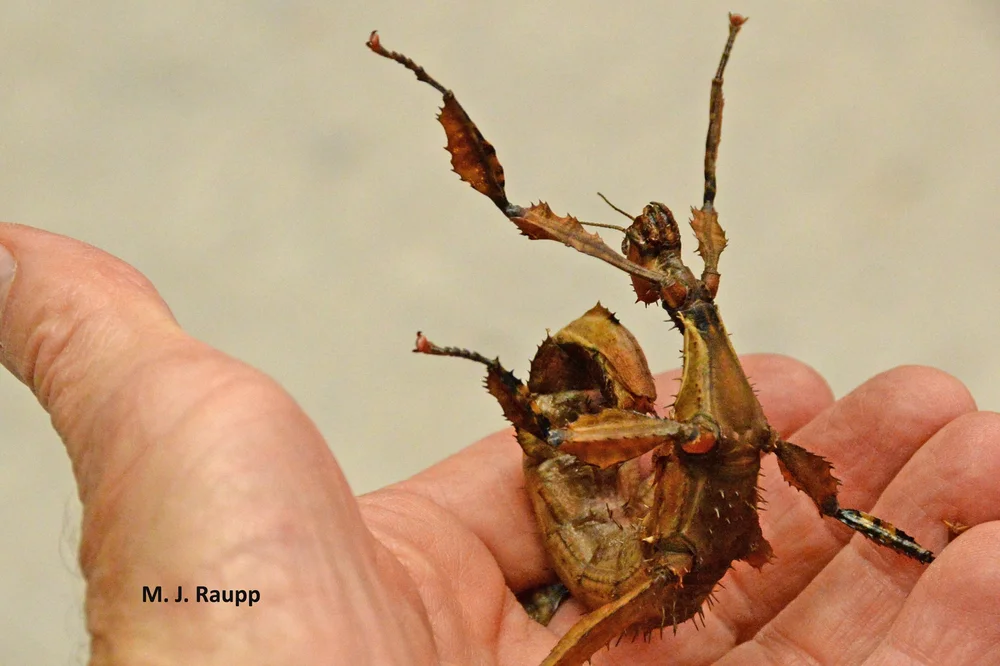
A startling display of bristling spines warns predators to think twice before attacking.

Trick number three, show them your spines. Playing the part of a hungry predator, I reached out to grab a large female walking stick and was rewarded with a threatening display of outstretched forelegs, head arched backward, and abdomen arched forward, all body parts bristling with a phalanx of nasty looking spines. This posture clearly was a warning to attack only with the threat of imminent pain – a challenge I foolishly accepted. Trick number four, impale the enemy. As I grasped Macleay’s spectre, she forcefully embraced my fingers and hand, stabbing my skin with several spines that failed to draw blood but nonetheless left a lasting impression. I imagine a bird or lizard biting into a mouthful of said spines might forgo an attack on another walking stick at the next encounter.

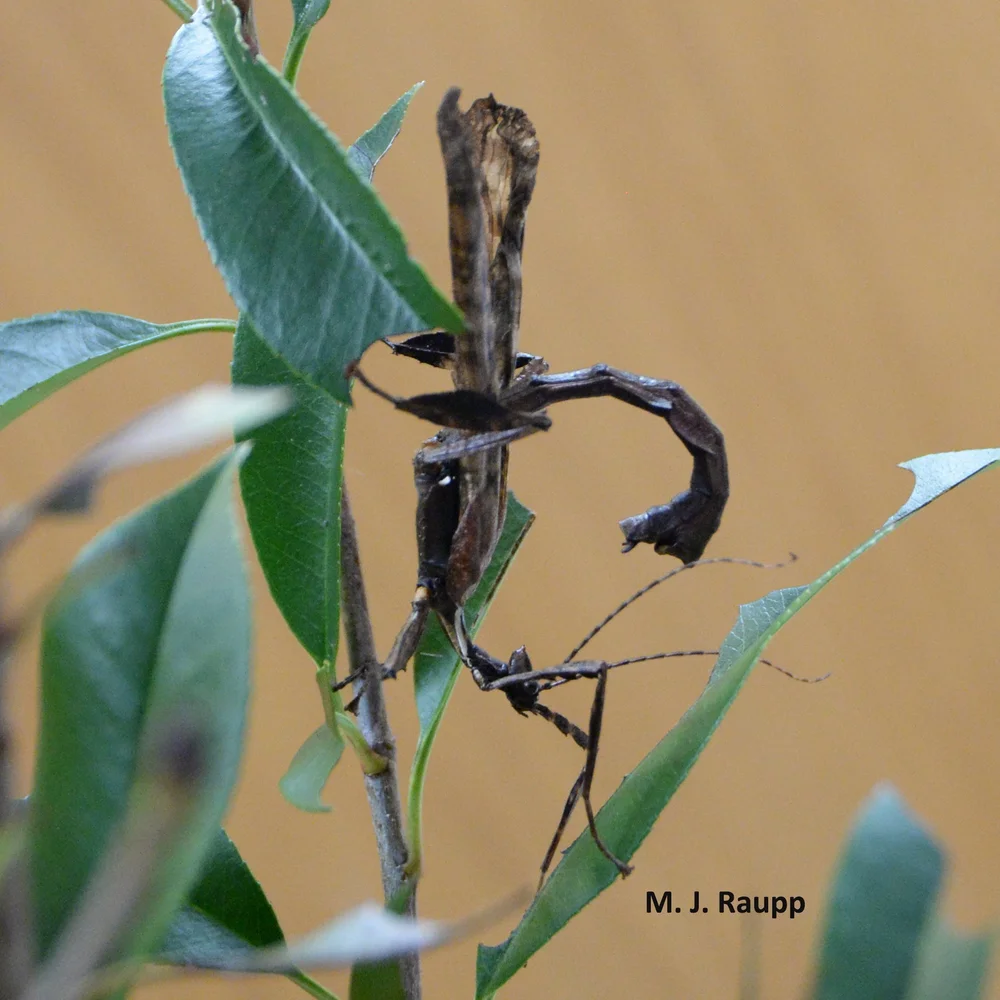
Smaller male Australian walking sticks also use expanded body parts and unusual postures to deceive predators by resembling withered parts of plants.

Trick number five, like many other insects and some vertebrates, including critters such as crickets and leaf-footed bugs we met in a previous episode, Macleay’s spectres are able to shed a limb on demand.  A special muscle allows a leg or antenna to snap off at the insect’s bidding under threatening circumstances. This phenomenon, known as autotomy, allows the insect to lose a leg and save its life by distracting the hungry predator. When the predator stops to examine or eat the severed limb, the bug makes its getaway. Clever morphological and behavioral adaptations allow this grotesquely beautiful giant to best its enemies and survive in a Land Down Under.        

Acknowledgements

We thank Todd Waters for maintaining the Insect Petting Zoo at UMD and thereby providing the inspiration for this week’s episode.  We thank Men at Work for “Do you come from a land down under?” but what does “where women glow and men plunder” mean? The interesting article “The swaying behavior of Extatosoma tiaratum: motion camouflage in a stick insect?“ by Xue Bian, Mark A. Elgar, and Richard A. Peters provided fascinating insights into the quirky behaviors of Macleay’s spectre.


Monday, 9 March 2026

Destination Malaysia to meet a giant: Jungle nymph, Heteropteryx dilatata

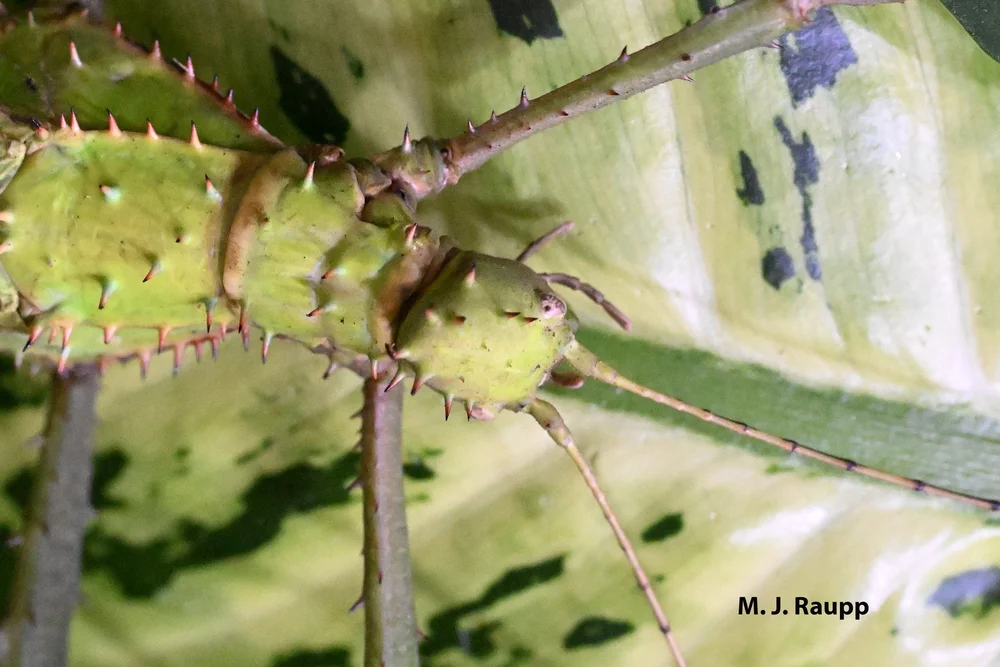
A forest of sharp spines on head, legs, and body present a challenge to predators attempting to eat this large phasmid.

This week we return to the tropical rainforests of Malaysia where we met the beautiful orchid mantis in our last episode. Today we will meet one of the true giants of the insect world, the amazing jungle nymph. The jungle nymph belongs to the clan of insects known as phasmids, an ensemble of fascinating insects that include walking sticks and leaf insects that rely on mimicking plant parts to escape detection by hungry predators. As we learned last week, the orchid mantis employs a tactic called aggressive mimicry. By mimicking the form and color of a flower, the orchid mantis lures pollinators close to its powerful, raptorial front legs, where they are captured and consumed. The jungle nymph is an herbivore dining on leaves from a variety of plants in the rainforest. Its large size, with some females reaching nearly seven inches in length, makes it a rewarding meal for any predator that can find and subdue it. However, finding and subduing it are challenges due to the special powers of the jungle nymph.

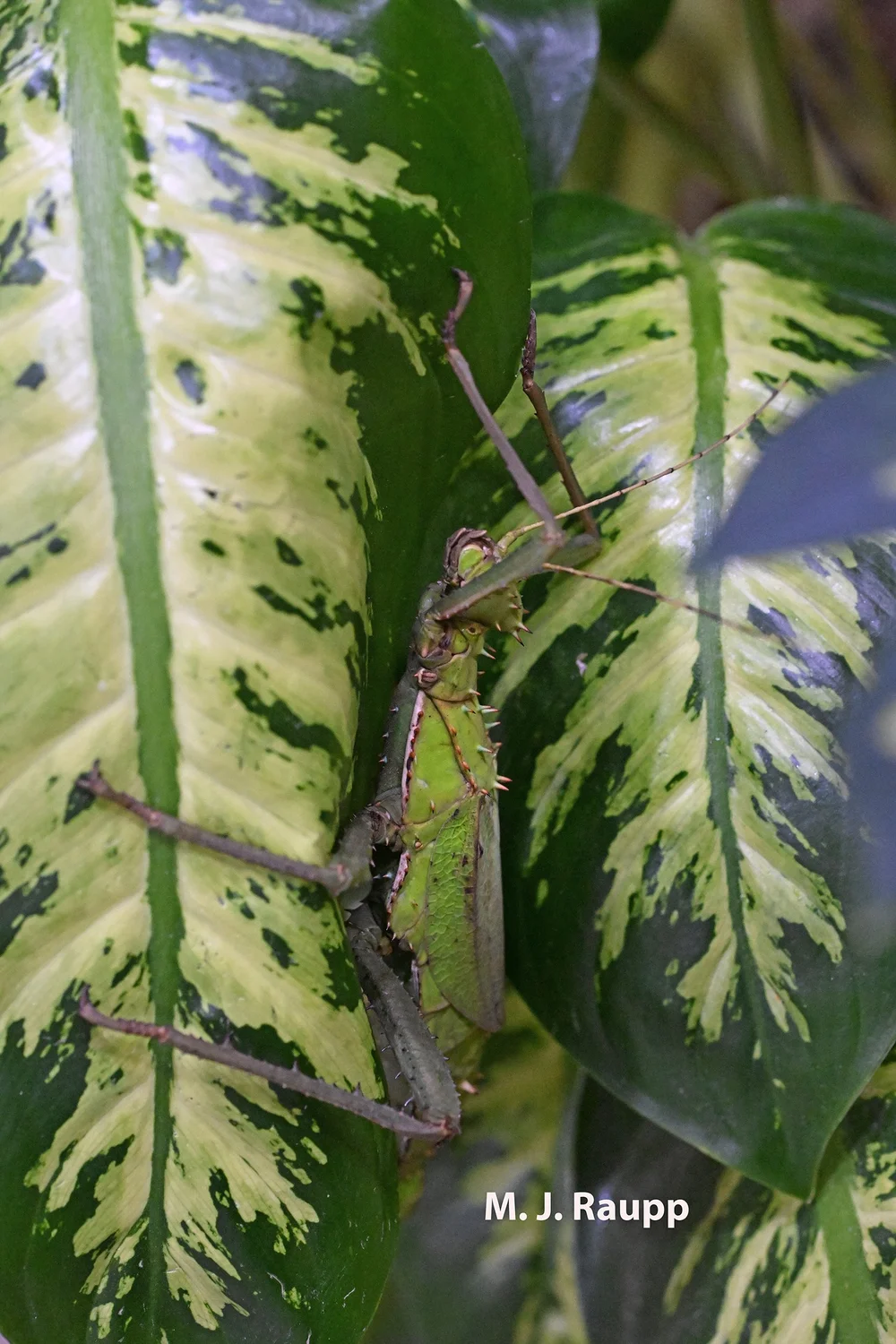
The combination of foliage-matching coloration and glacially slow movements help the jungle nymph escape the searching eyes of predators in the rainforest.

First is the power of disguise. The bright green color and body outline of the female help it blend with tropical foliage and masquerade as part of a plant, whereas the typical mottled brown color of the smaller male allows it to blend in with the twigs it hangs out on. Second is the power of sharp spines. If discovered, a predator must be relatively large and prepared to deal with an armament of sharp spines that festoon the head, legs, and body of the phasmid. As I attempted to capture a jungle nymph, I was surprised by how quickly it contorted its powerful body to stab my hand and fingers with spines on the sides of its body and legs. Third is the power of scary sounds. When I was finally able to grab the phasmid, it rapidly raised and lowered its abdomen creating a strange and unnerving scratchy-rustling sound. It made me pause and wonder what type of creature I had grabbed. The sound is a form of stridulation where opposing body segments rub across each other to create vibrations and sound meant to startle, confuse, and perhaps, dissuade a predator’s attack. In a previous episode featuring beetles in Borneo, we met another champion stridulator known as the tooth-necked longhorn beetle.  

Colors that match the foliage on which it rests help the jungle nymph hide from hungry predators in the rainforest. If a predator does find the phasmid and attacks, it is confronted by a vast array of sharp spines designed to pierce tender mouthparts of the enemy. One last trick employed by the jungle nymph is a disturbing scratching, rustling sound that may startle the predator and cause it to break off its attack. An array of clever defenses helps this giant survive the perils of the Malaysian rainforest.

This marvelous phasmid was first described by Mr. John Parkinson in 1797 from specimens in the Leverian Museum in England. However, this giant of the jungle was surely known by indigenous people of southern Asia. How could you miss this amazing insect? To visit this beauty in its native habitat, plan a trip to Thailand, Singapore, Sumatra or Sarawak on the island of Borneo. An adventure to these lands is not a bad idea after the winter we have experienced here in the DMV.

 Acknowledgements

We thank Todd Waters for maintaining the Insect Petting Zoo and the spectacular jungle nymph at the University of Maryland, thereby providing the inspiration for this week’s episode.


Monday, 2 March 2026

Destination Malaysia: Pollinators beware of the orchid mantis, Hymenopus coronatus

This may be the last thing a pollinator sees before it gets eaten.

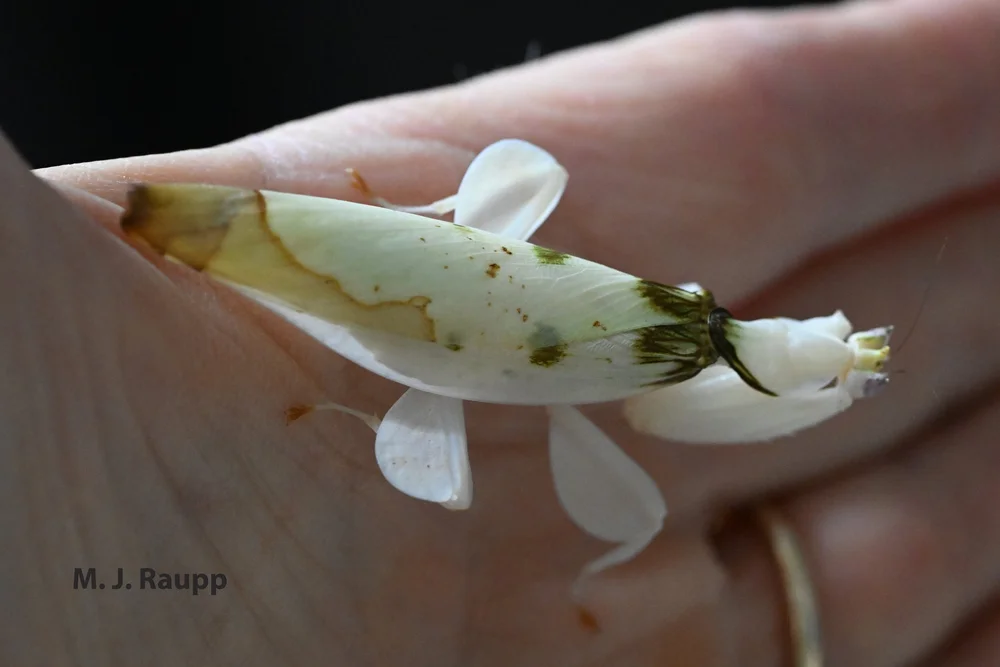
This week we leave the rainforests and pyramids of Belize, where we met delectable termites, pretty peacock butterflies, painful scorpions, and tiny false scorpions, and enormous  elephant beetles, to meet a mistress of disguise and deception, the beautiful orchid mantis. One early explorer described an incredible flower able to capture and consume small insects that stopped in for a visit. This case of mistaken identity is a testament to the marvelous color and morphology of the orchid mantis, which gives it a striking resemblance to a tropical blossom.

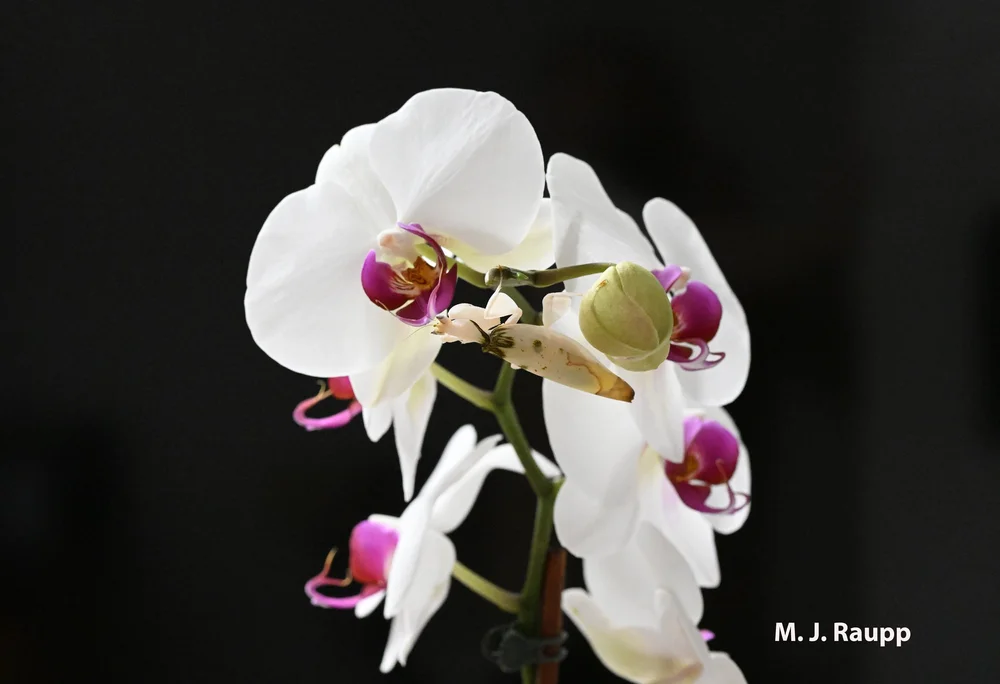
Who is that masquerading as part of an orchid blossom?

The evolution of insects to mimic the shape, color, and movement of plant parts has been witnessed in other episodes of Bug of the Week, where we visited walking sticks from Vietnam and spiny leaf insects from Australia. Resembling a plant part is a clever ruse believed to have evolved in many insects to escape the hungry eyes of vertebrate predators with a taste for insects. This form of deception is called masquerade, resembling an inedible object to fool an enemy. However, the uncanny resemblance of the orchid mantis to a blossom takes the art of deception one step further. 

Hiding in plain sight, an orchid mantis masquerades as part of a blossom. Unsuspecting pollinators like wasps and bees will be attracted to the flower and the mantis in their quest to get nectar and pollen. Mantises are sit-and-wait predators and most of their time is spent motionless, with occasional interruptions to groom their raptorial, prey-catching legs. So beautiful and so deadly.

While resembling a flower may serve as a dodge to a meat-hungry predator, it has long been thought that by resembling a blossom the orchid mantis may lure hopeful pollinators close enough to be trapped in the deadly embrace of the mantis’s spiny forelegs. This form of mimicry has been called aggressive mimicry.

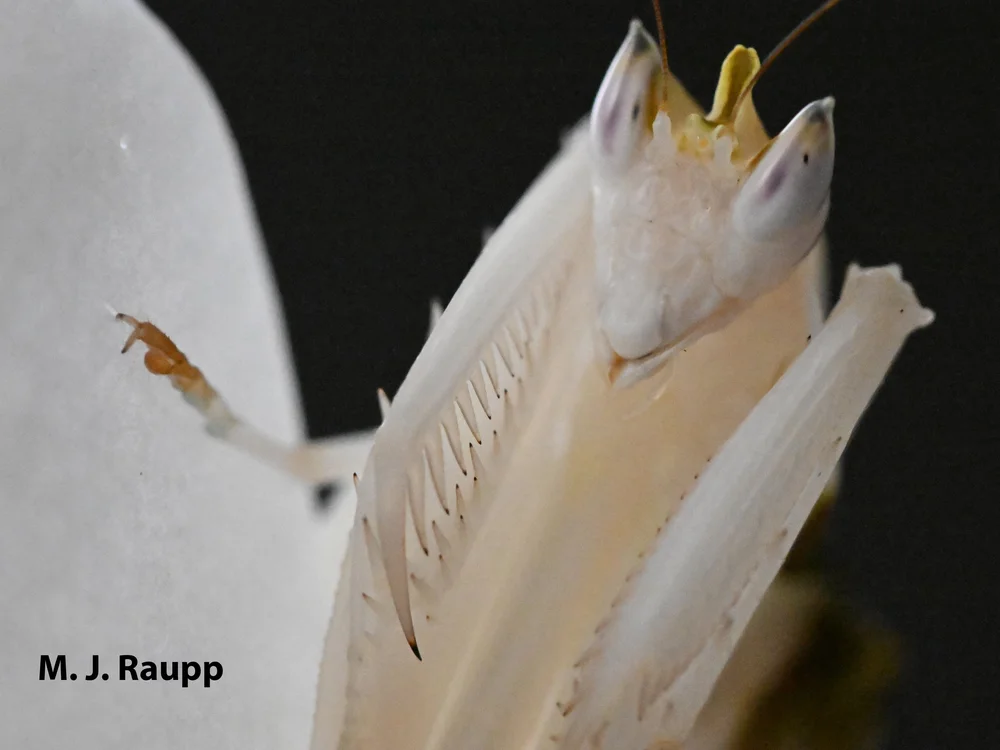
Wicked spines on the foreleg of the orchid mantis are used to capture prey.

A brilliant study by James C. O’Hanlon and his colleagues tested the notion that the orchid mantis could indeed attract pollinators, dooming them to wind up in the belly of this fierce and beautiful predator. First off, they demonstrated that the chromatic profile of the mantis was an “indistinguishable” match for a variety of flowers visited by bees and wasps in the area where mantises, blossoms, and pollinators co-occurred. Then, by placing mantises on naked vertical sticks, that is a stick with no flowers, they discovered pollinators did indeed visit the mantises and fall victim to their lightning strikes and sharp jaws. So good was the deception that the solitary mantises attracted pollinators at a higher rate than the actual flowers nearby.

Expanded legs resembling flower petals and wings tinted like fading leaves help the orchid mantis pose as part of a blossom.

Feeling a bit sorry for the pollinators and stealing a line from K.N. Lee in War of the Dragons, I wonder “How could something so beautiful be so deadly.”

 Acknowledgements

We thank Todd Waters for maintaining the Insect Petting Zoo at the University of Maryland and thereby providing the inspiration for this week’s episode.  The fascinating article, “Pollinator Deception in the Orchid Mantis” by James C. O’Hanlon, Gregory I. Holwell, and Marie E. Herberstein provided great insights into the clever mimicry of the orchid mantis.