Monday, 26 January 2026

Destination Toucan Ridge, Belize to visit rainforest recyclers: Conehead termites, Nasutitermes spp.

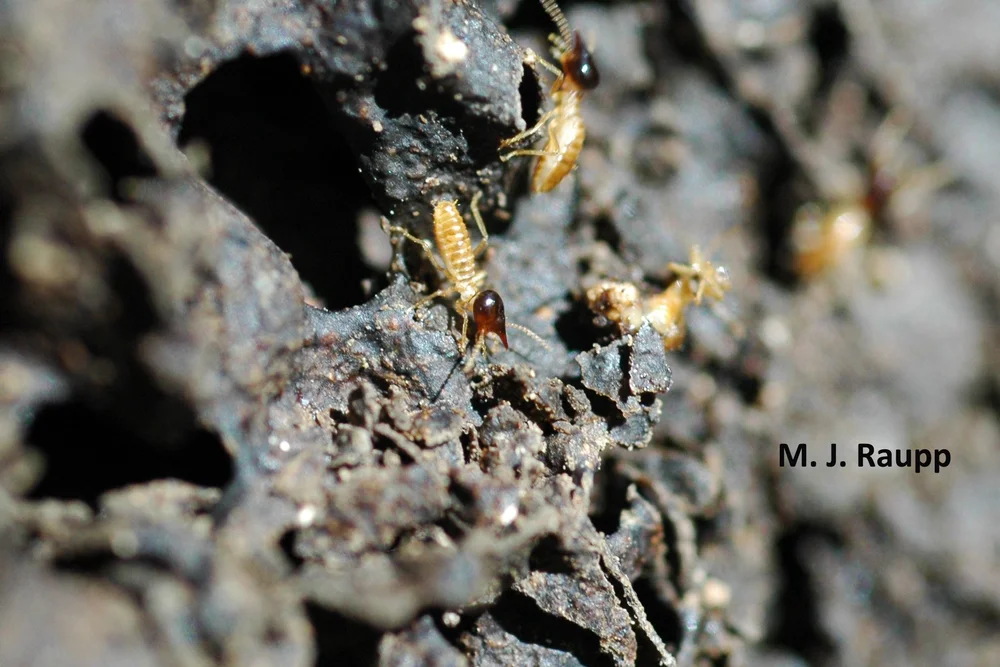
Soldiers of different termite species have unique adaptations for repelling enemies. Depending on the species of termite, soldiers are armed with jaws that stab, cut, snap or whack an enemy. Termite soldiers in this nest are chemical warriors known as nasutes. These highly evolved termites have dark brown heads with a long, tubular snout, called a nasus. From this nasus, they squirt sticky defensive secretions that can entangle, irritate, and repel invading enemies such as ants.

As the wicked winter tightens its grip on much of North America, let’s take another trip to somewhere warm. We recently visited pretty orchid bees, hungry leaf beetles, and squirty froghoppers in the cloud forest of Costa Rica. This week we travel some 800 miles north to the rainforest at Toucan Ridge, Belize. In this lush green paradise warm temperatures and abundant rainfall make this one of the most productive ecosystems on the planet. Rapidly growing trees and shrubs provide a bounty of food for legions of plant-eating insects, reptiles, birds, and mammals. However, these vegetarians alone cannot devour the enormous quantity of plant material produced. Plant debris would soon bury the jungle were it not for work of another group of plant eaters, the termites. Termites are remarkable creatures that consume both living and dead plant material in the tropics. To utilize the nutrients tied up in plants, termites rely on a hearty gut microbiome of symbiotic bacteria and, in some primitive species, protozoa, to help digest the refractory plant material called cellulose.

Dark trails of soil, wood particles, and feces mark the corridors used by sunlight-fearing termites to reach food sources in the canopies of trees.

Termites have an unusual and rather crude way of passing these vital microbes from one termite to the next through a process known as proctodeal trophallaxis. One termite excretes a droplet of microbe-packed fluid from its anus. This packet of goodies is consumed by another termite waiting at the rear end. Yum! The transfer of liquids from one termite to the next is also a way of disseminating chemical messages called pheromones that regulate the development and behavior of termites within the colony.

Strange, large, coffee-brown objects adorning trees in the rainforest are aerial nests of termites.

While adventuring along a slippery mountain trail with 18 adventurous students, we happened upon a large nest of conehead termites. Our local Belizean trail guide shared lore of the importance of termites to the ancient Mayan people. Mayans used termites as bait for fish in a way known only to them. Mayans crushed and smeared termites on their skin as a natural repellent for biting flies like mosquitoes. Mayans also consumed termites as a source of nutrients. Our Belizean guide invited us to sample termites to learn why so many insects, birds, and mammals seek a termite buffet.

Along a rainforest trail we encountered a large aerial termite nest. Our Belizean guide opened the nest and invited us to sample termites to learn why so many insects, birds, and mammals seek a termite buffet. By holding his hand against the hole in the nest, he collected several nozzle-headed soldiers that had issued forth to defend their colony.  After our guide dined on a few, several bold students and one professor sampled the tiny defenders. After plucking a few workers from the colony and savoring each morsel, I found the delicate flavor reminiscent of carrots. Little wonder the Mayans enjoyed them. Others in our group did not share my assessment. Some quipped that termites tasted, well, like bugs. 

To demonstrate this point, our guide made a platter-sized rent in the termite nest. By holding his hand against the hole in the nest, he collected several nozzle-headed soldiers that had issued forth to defend the nest. After our guide dined on a few, several bold students and one professor sampled the tiny defenders. After plucking a few workers from the colony and savoring each morsel, I found the delicate flavor reminiscent of carrots. Little wonder the Mayans enjoyed them. Others in our group did not share my assessment. Some quipped that termites tasted, well, like bugs. 

Scores of termite solders scramble to protect the colony when the outer protective shell has been breached.

Termites are part of an elite group of social insects that include the ants and several wasps and bees. Social insects such as termites and ants have a distinct division of labor with a caste system that includes specialized workers, soldiers, and reproductives. Termite reproductives are called kings and queens. These long-lived queens produce thousands and thousands of eggs during the course of their lives, which can span several decades. Termite queens are the longest lived of all insect species. Termite kings live only long enough to mate and they die soon thereafter. While Tom Petty lyricized that it was good to be king, from the longevity standpoint it’s better to be queen in the termite realm.

Atop the high pyramid of Caracol, students from the University of Maryland explore the wonders of tropical rainforests and Mayan civilizations. Image: Tarique Domingo

Acknowledgements

Bug of the Week thanks the adventurous students and faculty of BSCI 339M, Belize: Tropical Biology and Mayan Culture, for providing the inspiration for this episode. We thank our guides Will and Tarique for teaching us the ways of the Mayans. Special thanks to the staff of the Toucan Ridge Ecology and Education Society for allowing us to learn about insects in their rainforest reserve. Two great books, "The Insect Societies" by E.O. Wilson and “For Love of Insects” by T. Eisner, were used as references for this Bug of the Week.    


Monday, 19 January 2026

Destination Monteverde Cloud Forest: a visit with beautiful and perfumy Eulaema orchid bees

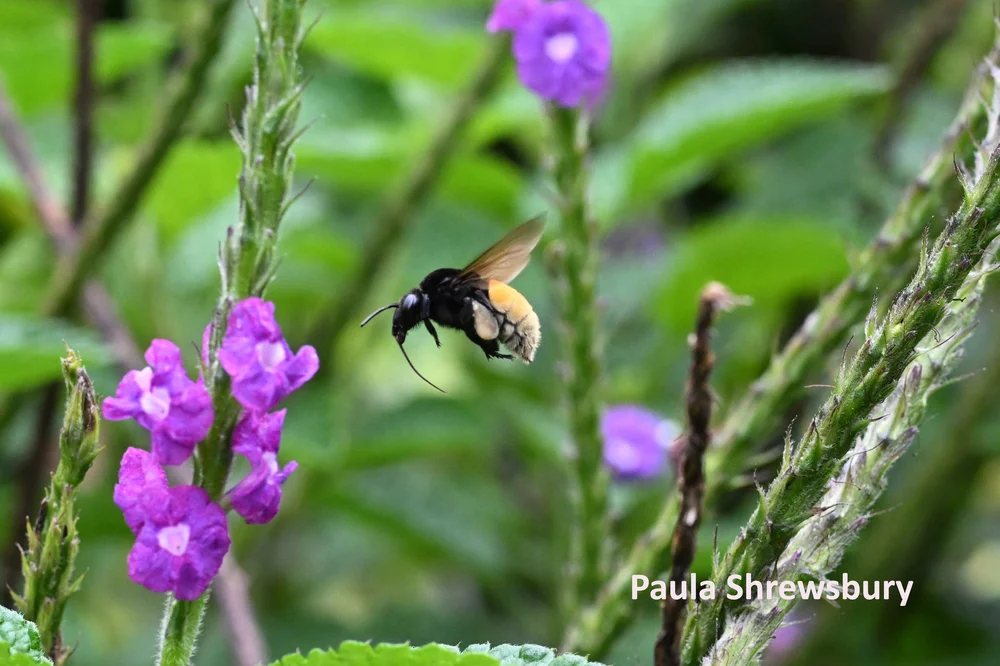
Orchid bees use their remarkably long proboscis, often called a tongue, to collect nectar from blossoms.

This week we return to the mystical cloud forest of Monteverde Costa Rica where, in the last two episodes, we met beautiful golden frog hoppers and rolled-leaf hispine beetles that make beautiful heliconia plants their meal and home. In a stylish landscape along a high mountain road, we saw some large busy bees visiting beautiful purple porterweed. At first glance these appeared to be busy bumblebees, but with a little help from iNaturalist, we learned that these were large orchid bees in the genus Eulaema. In addition to pollinating porterweed, large orchid bees, including Eulaema, are important pollinators of a wide variety of orchids including one of my favorites, the second most expensive flavoring in the world, vanilla. While female orchid bees collect massive loads of pollen to feed their young, male orchid bees have evolved remarkable morphological structures and equally clever behaviors to woo their mates. On a section of their hide leg called the tibia, males evolved a greatly expanded hollow pouch. This hollow pouch has an opening to the air to release fragrances called perfumes. Let’s see what this is all about.  

Here's a little backstory. In the dating game of humans, odors make a difference. Does anyone really want a stinky partner? Apparently not. For centuries humans have used fragrances to grab the attention of a potential mate. The global perfume industry is valued at more than 50 billion dollars annually. Guess what, male orchid bees have also figured out that the right odor can make you a winner in the mating game.

Even in flight Eulaema has its proboscis ready for action.

Male orchid bees visit sources of volatile scents in a wide variety of places including flowers, tree sap, resin, fungi, and other places to collect several different fragrances. How do they collect these perfumes? Male bees secrete droplets of lipid compounds from their mouthparts onto the surface of a flower or other source of odors. Various scented compounds are absorbed into the lipid droplets. These droplets are then collected and stored in the hollow chamber of the expanded tibial pouch of the hind leg. During courtship the male orchid bee fans its wings, causing the fragrances stored in the hind leg to become airborne. The unique blend of the male’s perfumes attracts potential mates, enabling female orchid bees to recognize males of her species and to choose that special someone to be the father of her offspring. I must wonder if orchid bees have a lesson here for us. 

In the cloud forest of Monteverde, large bees visit purple porterweed. Although resembling bumble bees, these beauties are orchid bees in the genus Eulaema. In addition to pollinating porterweed, Eulaema pollinate a wide variety of orchids including one of my favorites, vanilla. They sip nectar through a remarkably long proboscis, also called a tongue. While female orchid bees collect massive loads of pollen to feed their young, male orchid bees collect fragrances from many sources and store them in perfume pouches on their hind legs. To attract a mate, the male bee fans its wings, releasing his perfume into the air. Female orchid bees use these odors to recognize males and choose just the right mate to father their offspring.

 Acknowledgements

We thank Paula Shrewsbury for sharing her pretty images of Eulaema foraging on porterweed in the cloud forest.  Two fantastic articles “Evolution of Acquired Perfumes and Endogenous Lipid Secretions in Orchid Bees” by Thomas Eltz, Tobias Mende, and Santiago Ramírez, and “Non-floral scent sources of orchid bees: observations and significance” by Jonas Henske, Bart P. E. De Dijn, and Thomas Eltz were sources of information for this article.


Monday, 12 January 2026

Destination Monteverde Cloud Forest, Costa Rica: Life is on a roll in a roll – Rolled-leaf hispine beetle, Cephaloleia spp.

Unrolling an unexpanded Heliconia leaf reveals a lovely rolled-leaf hispine leaf beetle.

Last week we visited beautiful Heliconia plants where we met some very pretty Golden Froghoppers as they sipped sap from leaves of Heliconia. This week we return to the lovely Heliconia plant to explore strange patterns of herbivore feeding on their leaves. These marks were created by some unseen herbivores that scraped away leaf tissue from the surface of the tender green leaves. These interesting patterns included small linear rows of missing tissue and larger isolated jelly-bean shaped translucent scars on the leaves. These marks were the handiwork of a curious group of leaf beetles, Chrysomelidae, known as rolled-leaf hispine beetles.

What caused these unusual holes and marks on the Heliconia leaf?

In tropical regions of the Americas more than 180 species of rolled-leaf hispine beetles have been described. In addition to Heliconia plants, several other members of the ginger family serve as hosts for rolled-leaf hispines. While the star of this week’s episode feeds on the unfurled leaves of Heliconia, other members of the clan eat tissues of flower bracts and leaf petioles. For Cephaloleia spp. we visit this week, life begins in a tubular leaf-scroll where female beetles deposit eggs between the rolled layers of an unfurled Heliconia leaf.  These eggs hatch into extraordinarily flattened larvae with a perfect body shape for life between the appressed layers of a rolled leaf. Their mandibles scrape soft, nutritious tissue from between the veins of Heliconia leaves. Their feeding behavior, termed “strip-mining”, is responsible for the linear feeding patterns seen on unfurled leaves.

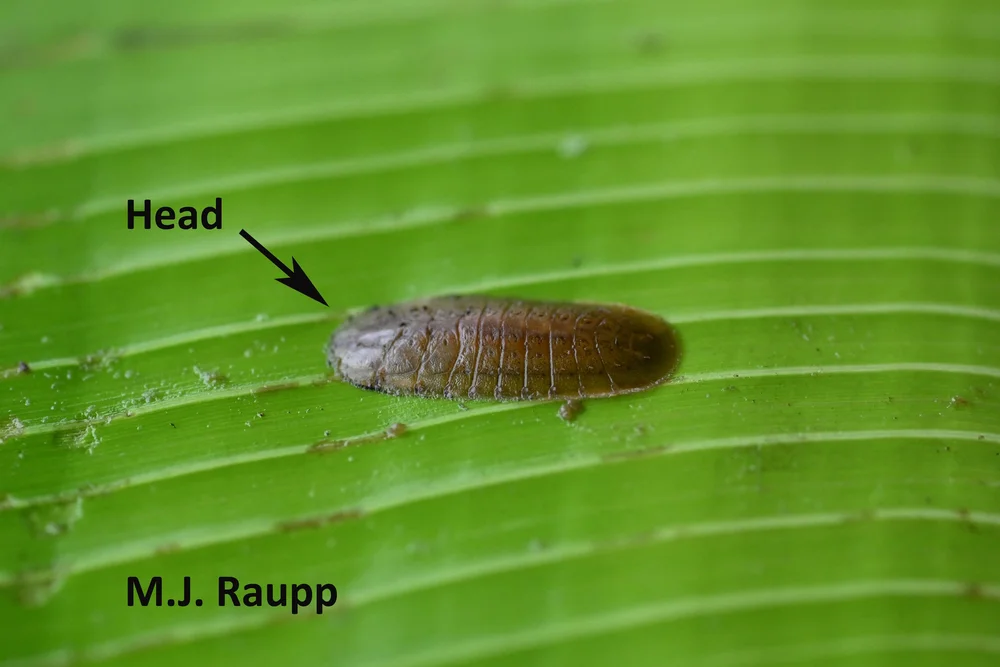
For strange rolled-leaf hispine larvae it is difficult to tell the head from the tail.

Beetle larvae glide across the surface of the leaf on unseen legs beneath their body. Larval locomotion is strangely reminiscent of the movement of a slug or snail. Larvae of Cephaloleia pupate in a nook or cranny of the Heliconia plant before emerging as adults that return to the safety of a rolled leaf to feed. Adults create larger feeding marks on the leaf surface, as do fully developed larvae.

This week we return to the beautiful Heliconia plant to unravel the mystery of some strange feeding marks on its leaves. With no one home on the surface of an expanded leaf, unfurling a rolled-up leaf revealed a hungry rolled-leaf hispine leaf beetle and its feeding wounds on the leaf margin. On the inside of a more mature leaf-roll, a young beetle larvae glides over its older cousin on six tiny legs hidden beneath its body. Partially unrolling the scroll-like Heliconia leaf sent this leaf beetle scampering for the cover of a furled section of the leaf. Mystery of strange feeding marks on Heliconia solved.

In Costa Rica, some species of Heliconia are home and tucker to several species of rolled-leaf hispine beetles. In addition, the number of hispine beetle species increases with the geographic range of their ginger-family host plants, physical size of the plant species on which they feed, and abundance of plant hosts in an area. For Costa Rican Cephaloleia, life is on a roll in a roll.

Different species of rolled-leaf hispine beetles have unique feeding sites leaving distinct feeding marks on plants.

Acknowledgements

The wonderful articles “Rolled-Leaf Hispine Beetles (Chrysomelidae) and their Zingiberales Host Plants in Middle America” by Donald R. Strong, Jr. and “Notes on the ecology of rolled-leaf hispines (Chrysomelidae, Cassidinae) at La Gamba (Costa Rica)” by Michael Schmitt and Meike Frank served as references for this episode.


Monday, 5 January 2026

Destination Monteverde Cloud Forest, Costa Rica: Striking gold and spittle in the cloud forest - Golden Froghopper, Mahanarva costaricensis

It’s easy to see why this pretty insect is called the Golden Froghopper.

As the holiday season draws to an end and the chilly grip of old man winter settles into the DMV, it’s time for Bug of the Week to head to warmer realms to visit insects and their kin in tropical places. Over the next several weeks, we will meet relatives of our native Maryland insects that enjoy warm weather somewhere else on planet earth. Our first stop will be the cloud forests of Costa Rica. Here we will meet some of the fascinating insects that make their home on the beautiful Heliconia plants found throughout tropical regions. Our first delight is the Golden Froghopper.

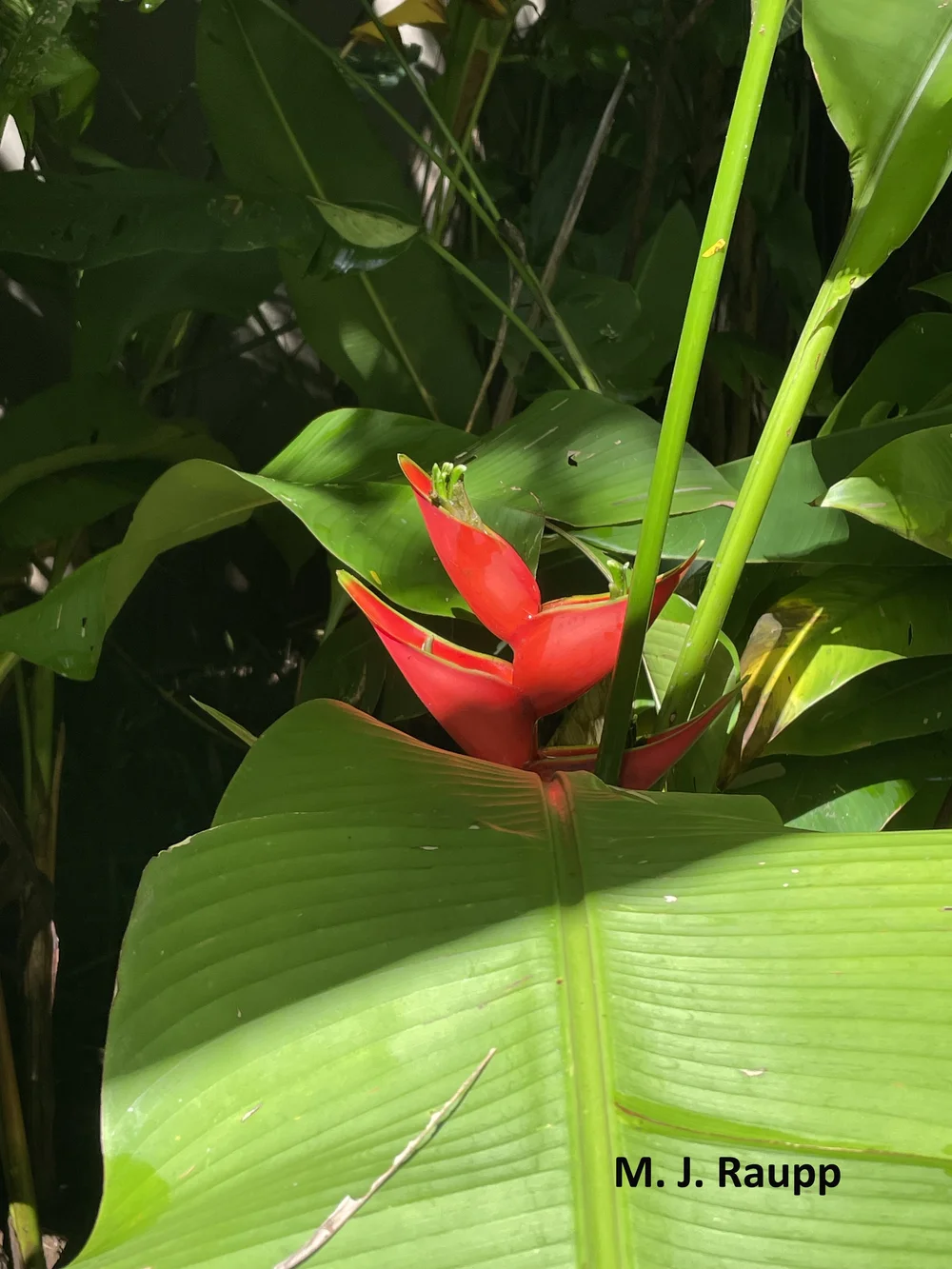
Beautiful Heliconia plants are home to many insects, including the Golden Froghopper.

Froghoppers are a large family of insects technically known as Cercopidae.

Beautiful Heliconia plants are home to many insects in the tropical rainforests of Costa Rica. Gorgeous Golden Froghoppers can frequently be seen strolling across Heliconia leaves and dining on their nutritious sap. Excess fluid discharged from their rear-end is called honeydew, and it rains down on plants and slow-moving people below. Maybe this is yet another reason it rains in the rainforest.

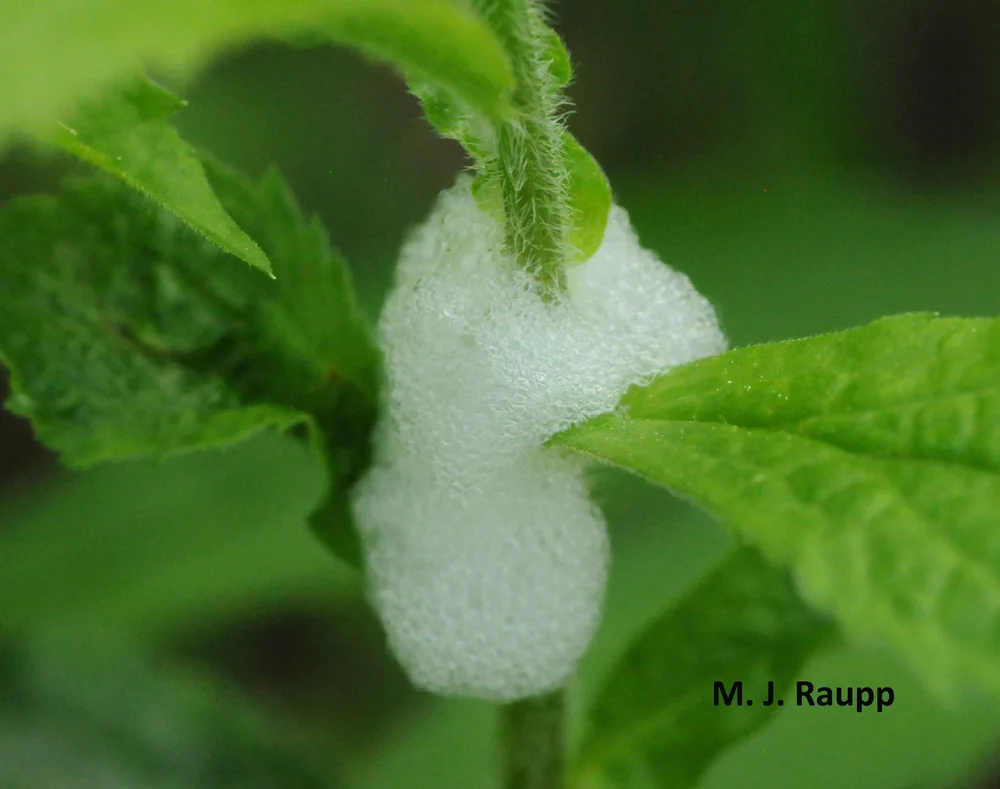
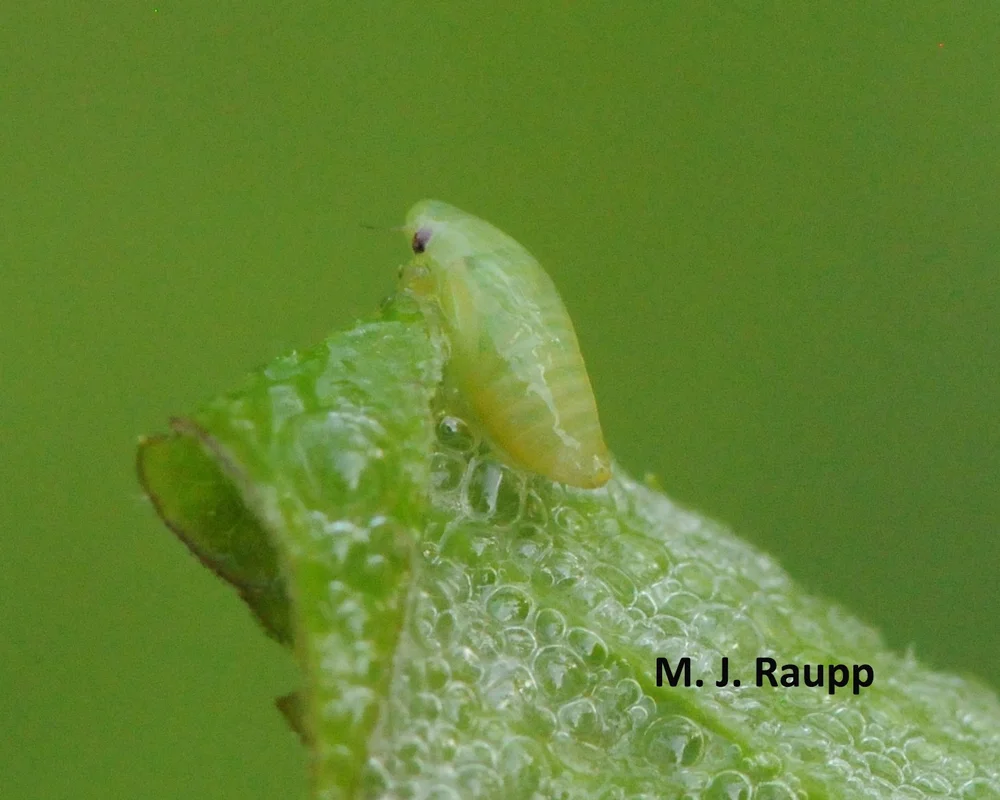
Immature stages of froghoppers produce a bubbly concoction called spittle. Unsurprisingly, they are called spittlebugs. Spittle is a fairly innocuous mix of excess plant fluid voided by froghopper nymphs. Proteinaceous glandular secretions and air bubbles introduced by clever contortions cover the body of the nymph. The spittle serves to keep the developing nymph moist and insulated from extreme temperatures. It also may serve as a deterrent from attack by stinging parasitoids and hungry predators. Would self-respecting birds really wade through a glob of spittle in search of a buggy meal? I think not.

What’s this? It looks like spittle.

After molting several times within their bubble home, nymphs turn into winged adults. Adults suck plant sap to obtain nutrients and excrete excess sap in the form of honeydew, as do other sap-suckers including aphids, scale insects, and lanternflies.

A cute spittlebug nymph wonders what happened to its bubbles.

Many adult froghoppers like those found in the DMV sport rather drab colors of gray or brown or cryptic shades of green and are not often seen during casual excursions to the garden. However, in the tropical rainforests of Costa Rica froghoppers can be stunning, like the gorgeous Golden Froghopper. Most spittlebugs and froghoppers cause no economic damage. While you may not have a chance to visit beautiful froghoppers in the tropics, next spring when you walk in the meadow, fear not the spittle and take a moment to brush back the bubbles and enjoy these curious sap-suckers.

Our native froghoppers like this one are often relatively drab.