Wednesday, 28 May 2025

Hey beetles, leave some milkweed for the monarchs: Milkweed leaf beetle, Labidomera clivicollis

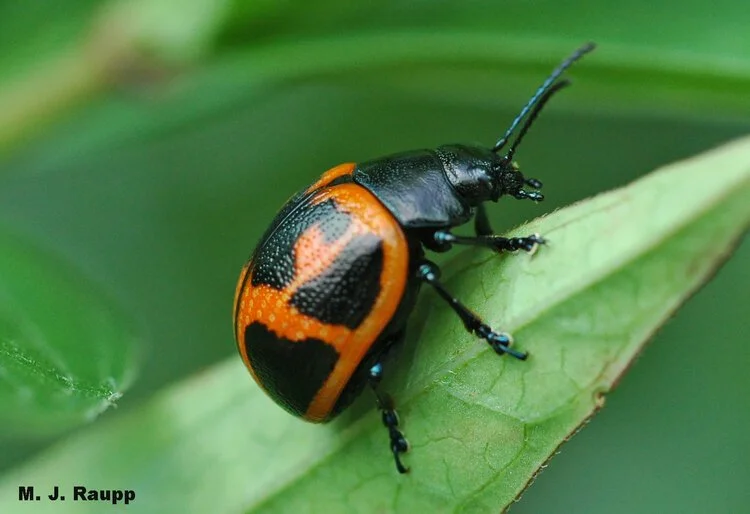
Beautiful adult milkweed leaf beetles sport Mother Nature’s warning colors of orange and black.

I really don’t have anything against beetles. In fact, beetles and I go back a long way as I studied many awesome leaf beetles in graduate school. However, butterflies, especially monarch butterflies, are a real delight and like many naturalists, I anxiously anticipate their return each year and celebrate their arrival. Unfortunately, in advance of the monarchs, another hungry milkweed connoisseur moved into my butterfly weed patch well in advance of the monarchs. Milkweed leaf beetles are relatives of other members of the chrysomelid clan, a large group of beetles that includes dogbane leaf beetles, Colorado potato beetles, and three-lined potato beetles we met in previous episodes. Adults and larvae of this striking insect eat leaves of common and swamp milkweeds growing wild in meadows, and also butterfly weeds running rampant in my perennial beds. Adult beetles are voracious feeders and after colonizing my butterfly weed, they quickly removed large slices of leaves. Milkweed leaf protein is translated into batches of eggs inside the ovaries of females. About a week after eggs are laid, rotund orange beetle larvae hatch and graze night and day.

Butterfly weeds are super attractors for pollinators and other insects as well. Last week an amorous pair of milkweed leaf beetles arrived on my butterfly weed. Orange jellybean - like eggs will soon be deposited on the undersides of milkweed leaves and tiny beetle larvae will hatch, feed, and develop into rotund leaf-munchers intent on devouring my milkweeds. With luck, in a few weeks, monarch butterflies will arrive, lay eggs, and populate my milkweed patch with caterpillars. Adult milkweed leaf beetles are large enough and apparently scary enough to displace small monarch caterpillars as they dine on milkweed leaves. Fortunately, butterfly weeds are prolific and there should be enough foliage to go around for all of the insects that make a meal of milkweed.   

One curious and somewhat disturbing habit of milkweed leaf beetle neonates is to go cannibalistic after hatching. Yes, some early hatchers perform the ultimate act of sibling rivalry and eat their unhatched brothers and sisters. Yikes! After starting life as meat eaters, the cannibals and their surviving siblings settle in to a vegan life style, consuming milkweed leaves before moving to the soil to pupate. In a few weeks, a fresh batch of adult beetles will emerge and initiate new conquests on my beleaguered butterfly weeds. As autumn approaches, the season’s last batch of adults fatten up on milkweed leaves before finding a protected refuge somewhere in my garden to spend the winter. As you can see, milkweed leaf beetles sport the same orange and black mien worn not only by the monarch, but also by milkweed tussock moths and milkweed bugs we visited in other episodes. This cabal of milkweed feeders has evolved the ability to thrive on milkweeds despite the presence of noxious heart poisons called cardiac glycosides found in the cells and sticky white sap of the milkweed plant. In some species like monarchs, these compounds are retained during the transformation of caterpillars into adult butterflies. Cardiac glycosides found in the wings of monarchs are known to cause severe digestive distress to avian predators. These compounds help protect monarchs from disappearing down the gullets of visually gifted predators like birds that regularly prey on caterpillars, butterflies, and beetles. Conspicuous orange and black colors worn by members of the milkweed gang serve as a reminder of a potentially nasty gastronomic misadventure to experienced birds and other predators that may have attempted to make a meal of a milkweed muncher. Fortunately for the monarch, butterfly weed is prolific and I hope there will be enough for everyone if and when the monarchs arrive in force.

Acknowledgements 

The delightful book “Secret Weapons” by Thomas and Maria Eisner and Melody Siegler, and the articles “Community-wide convergent evolution in insect adaptation to toxic cardenolides by substitutions in the Na,K-ATPase” by Susanne Dobler, Safaa Dalla, Vera Wagschal and Anurag A. Agrawal, and “Cannibalism and Kin Selection in Labidomera clivicollis (Coleoptera: Chrysomelidae)” by Kathleen R. Eickwort were used to prepare this episode.

Monday, 12 May 2025

How to raise a crop of termites: Eastern subterranean termites, Reticulitermes flavipes


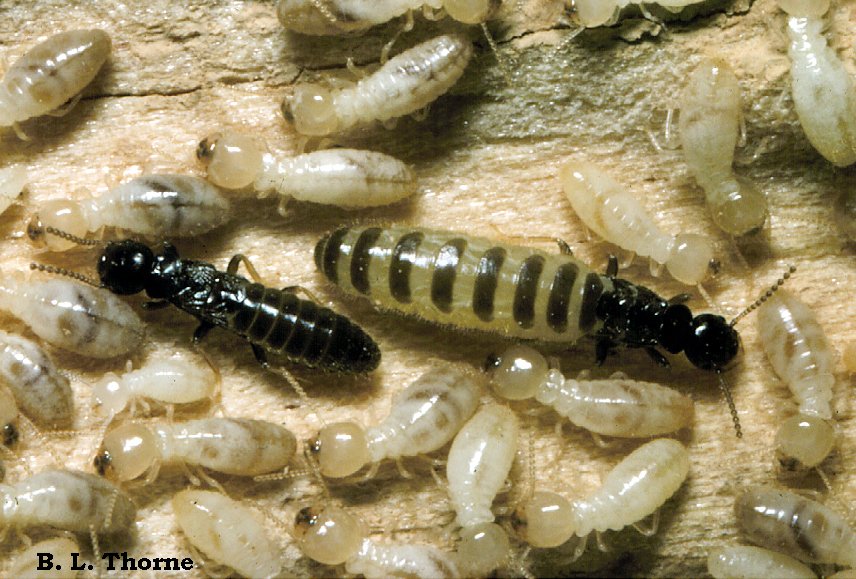
Meet the royals. The smaller king is on the left and his queen on the right. During her reign as queen, which may be decades, she will lay hundreds of thousands of eggs. Photo credit: Dr. Barbara L. Thorne (copyrighted)


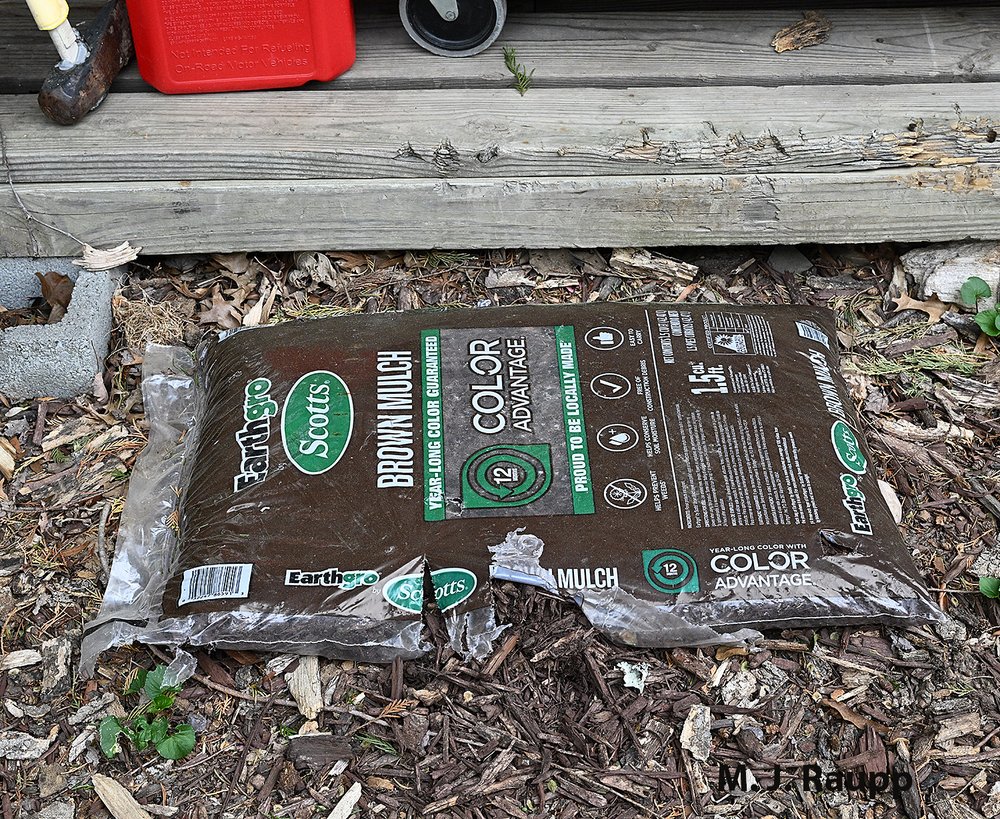
A neglected bag of mulch is a great place to raise a colony of termites.

A couple of weeks ago I went to the back yard to dispose of an unused bag of mulch near my woodshed. Upon lifting the bag, I discovered my tardiness created the perfect home for a colony of eastern subterranean termites. These ubiquitous rascals set up shop beneath the mulch bag, dining on chips of wood leftover from my wood-splitting efforts. They also dined on delectable morsels of cellulose and lignan in the mulch within the plastic bag. In addition to large-headed, large-jawed soldiers and diminutive workers, dozens of winged reproductives were ready to take flight on their mission to found new colonies. Termites are regular visitors to my landscape. Several years ago, on a sunny spring morning with the air temperature hovering in the 70s, I was treated to a full-blown termite swarm. The wooden risers of ancient garden steps were home to a massive termite colony. Over several hours, thousands of adult reproductive termites issued forth and took wing, fluttering off to establish colonies of their own.


Here’s a recipe for making termites. Buy one bag of mulch in autumn and place it on the ground near the woodshed where there are lots of wood chips. Let it rest undisturbed for six or seven months. When temperatures climb into the 70’s in April, turn it over and enjoy plenty of workers and dozens of winged reproductives ready to fly off and establish new colonies. Why, you can even find them inside the bag of mulch.

Termites are remarkable creatures with the ability to perform a digestive magic trick unparalleled in the human world. They consume wood. To utilize nutrients tied up in a biopolymer hard enough to dull an axe blade, most termites rely on symbiotic bacteria in their gut to digest the rugged plant material called cellulose. Some primitive species of termites enlist unicellular organisms called protozoa to accomplish this feat. Termites have an unusual and rather crude way of passing these vital microbes from one termite to the next. They employ a process known as proctodeal trophallaxis. One termite excretes a droplet of microbe-packed fluid from its anus. This packet of goodies is consumed by another termite waiting at the rear end. Yum! In addition to the transfer of vital symbionts from one termite to the next, trophallaxis is also a way of disseminating chemical messages called pheromones that regulate the development and behavior of termites within the colony.

Eastern subterranean termite soldiers have enlarged heads with powerful jaws. A tiny newly molted worker nymph is overshadowed by the huge soldier.

Termites are part of an elite group of social insects that include ants, bumble bees, honey bees, and yellowjackets we met in previous episodes of Bug of the Week. Social insects such as termites have a distinct division of labor with a caste system that includes specialized workers, soldiers, and reproductives. Workers are the most common caste in the subterranean termite colony. The primary tasks of these cream-colored laborers are to consume and process wood, seek new resources, construct galleries, build foraging tubes, and care for the young and reproductives. As the name implies, soldiers are tasked with colony defense. They are easily recognized by their enlarged heads with powerful darkened jaws. Depending on the species, soldiers are armed with jaws that stab, cut, or snap and whack an enemy. Termite reproductives are called kings and queens. As light-colored juveniles in the colony, they pass through a developmental stage called the nymph and are distinguished from workers by developing wing buds found on the thorax just behind the head. When they molt to the adult stage to become males (kings) and females (queens), their cuticle tans to dark black. This tanning process allows them to retain body moisture as they exit the damp earth and enter the drier world above ground.

Who’s filling the air around my home on a sunny spring morning? Why, thousands of reproductive termites spawned from wooden steps in my backyard. Watch as they issue forth from gaps in the wood and mount vegetation to take flight. Can you count how many there are?

During spring and summer in the DMV, the air can be filled with thousands of termites, known as primary reproductives, swarming to found new colonies. But the world above ground is treacherous and only a few of the thousands that emerge live to establish a new colony. After landing at a new site, wings are no longer needed, and kings and queens will quickly shed their wings by snapping them off with quick twists and turns of their body. Hopeful males frantically pursue potential mates and the lucky ones that succeed in the mating game help their queen establish a colony. Queens of some species may live more than 40 years and produce more than 20,000 eggs per day. Eggs hatch and develop into workers, soldiers, and new reproductives. In addition to primary reproductives, termite colonies may also contain light colored secondary reproductives lacking wings that develop directly from nymphs, and tertiary reproductives that develop directly from workers. This remarkable system of reproductive redundancy undoubtedly contributes to the longevity and success of a termite colony.

After taking flight and landing at a new colony site, a female termite snaps-off her wings and is quickly pursued by a hopeful suitor.

In the natural world, termites live in subterranean nests, foraging on fallen trees. But with the advent of domestic structures, they often colonize dark interiors of floor joists and paneling within our home if conditions of moisture and temperatures suffice. They reach the structural wood of our buildings by constructing tunnels of soil, wood, saliva, and excrement from an outdoor colony like the one in my flower bed, up foundation walls until they reach the wood of a sill plate or floor joist. There they enter the home. If wood is sufficiently moist, let’s say it is due to a leaky pipe, plugged gutter, or cracked foundation, termites can set up shop inside your home. The appearance of swarming winged primary reproductives inside your home is a sure-fire indication of an infestation. To learn more about the biology and management of termites in and around your home, please visit the following excellent website:

https://extension.umd.edu/resource/termites/

Acknowledgements

Two great books, "The Insect Societies" by E.O. Wilson and “For Love of Insects” by T. Eisner, were used as references for this Bug of the Week. Bug of the week thanks Drs. Barbara Thorne and Nancy Breisch for assistance in creating this episode. All images and videos at Bug of the Week are copyrighted and may not be reproduced without permission.


Monday, 5 May 2025

A spotted lanternfly is born - Lycorma delicatula


The adult spotted lanternfly is a beautiful insect, but this sap-sucking plant hopper is nonetheless harmful to many plants in both the nymph and adult stages.


Ok, so I thought this was a catchy title but really very few insects give live birth to their young. Aphids and some flies birth living young, however, the vast majority of insects deposit eggs which then hatch, releasing their spawn into the world. Circling back to the topic, we have recently received numerous reports of spotted lanternfly eggs hatching in the DMV and in other states nearby. As we learned in a previous episode, invasive Tree of Heaven plays a key role as a food source for spotted lanternfly. Due to its widespread distribution and abundance in Washington County, MD some joke that Tree of Heaven is the titular state tree of Maryland. To witness the hatching phenomenon of spotted lanternfly, we traveled to a small woodlot near Hagerstown, Maryland. Here scores of Tree of Heaven and several other species were heavily infested with spotted lanternfly. In brilliant morning sunlight we watched dozens of spotted lanternfly nymphs escape the confines of their eggs and transform from ghostly, newly hatched nymphs into bespectacled, black tick-like creatures. Within an hour, highly mobile nymphs made a mad dash upward to the canopy of the tree. On a cherry tree nearby, small herds of black and white polka-dotted nymphs had settled in to suck sap from leaves.  

Watch as spotted lanternfly nymphs hatch from eggs deposited on tree-of-heaven by their mother last autumn. These time-lapse video segments reveal wraithlike nymphs rising from their egg cases over the span of about a half an hour. After hatching, nymphs move away from the mass. Within an hour, their body color changes from creamy white to jet black with pure white spots. They scramble to the tree’s canopy to suck sap from leaves. Nearby, a small herd of slightly older nymphs assemble to feed on vascular elements within a cherry leaf.

Throughout the DMV, wraithlike spotted lanternfly nymphs pop the lid on their egg case and hatch head-first from eggs deposited last autumn by females. They will resume their mischiefs feeding on plants and producing vast amounts of sticky honeydew.

At this time in the growing season, what can you do if you discover spotted lanternfly nymphs on plants in your landscape or garden? Nymphs are often found feeding on the underside of leaves. By holding a good old red solo cup filled with soapy water (no, not beer) beneath the leaf and tapping the leaf from above, nymphs will take a suicidal leap into the water. It turns out they are not good swimmers. If you don’t mind a more intimate approach to eliminating nymphs, they are easily crushed between fingers if you can catch them. They are really good at hopping away from predators and avenging humans. Another approach, of course, is to use insecticidal sprays. My favorites are those labeled for use in organic food production. These will be gentle on non-target organisms and help conserve them in our gardens and landscapes. Products may include natural pyrethrins, which provide excellent control of nymphs, or insecticidal soaps and oils, including neem oil, that provide good control. Once nymphs have moved from easily accessible low-lying vegetation to upper tree canopies, systemic insecticides may be used to reduce resident populations. We are fortunate to have well-trained arborists and landscapers who can apply highly effective insecticides to control lanternflies on trees and shrubs.  Many web-based information sources recommend scraping eggs masses from trees before they hatch. However, a publication by scientists at Penn State indicates that less than 2% of lanternfly egg masses are found in a reachable distance from the ground. They suggest a variety of tactics should be used when dealing with spotted lanternflies.

On the brighter side of this somewhat disturbing invasion is the fact that many of our indigenous beneficial organisms including spiders, praying mantises, and assassin bugs have demonstrated a fondness for snacking on lanternflies. In addition, naturally occurring indigenous fungi infect and kill lanternfly nymphs and adults. Some of these fungi have been formulated to be sprayed on lanternflies and are available commercially. In many locations, Mother Nature’s agents of doom inflict what is known as biotic resistance to these unwelcome invaders, dramatically reducing lanternfly populations. Regional quarantines in several jurisdictions help slow the spread of this clever hitch hiker. As we learn more about managing noisome lanternflies, we can be optimistic that our efforts in partnership with nature’s wisdom will reduce threats imposed by these invaders.    

Acknowledgements 

Bug of the Week thanks Josh for finding the location to film spotted lanternflies and a gracious landowner who shared her trees and insects. Paula Shrewsbury helped wrangle jumpy insects. To learn more about spotted lanternflies, please visit Penn State’s fantastic fact-filled spotted lanternfly website: https://extension.psu.edu/spotted-lanternfly-management-guide

Learn more about spotted lanternflies at stories on NBCs Today Show and WBALs Sunday Morning Show:

https://www.today.com/video/officials-warn-spotted-lanternflies-are-set-to-return-this-spring-171253317582

https://www.wbaltv.com/article/tips-on-dealing-spotted-lantern-fly-the-bug-guy/43687299

To learn more about regional quarantines in the DMV, please visit these websites:   

https://agriculture.delaware.gov/plant-industries/spotted-lanternfly/

https://mda.maryland.gov/plants-pests/Pages/spotted-lantern-fly.aspx

https://www.vdacs.virginia.gov/plant-industry-services-spotted-lanternfly.shtml